ChatGPT Exposed: OpenAI’s Sharing Feature Leaks Private Conversations to Google Search
 Ddos
Ddos 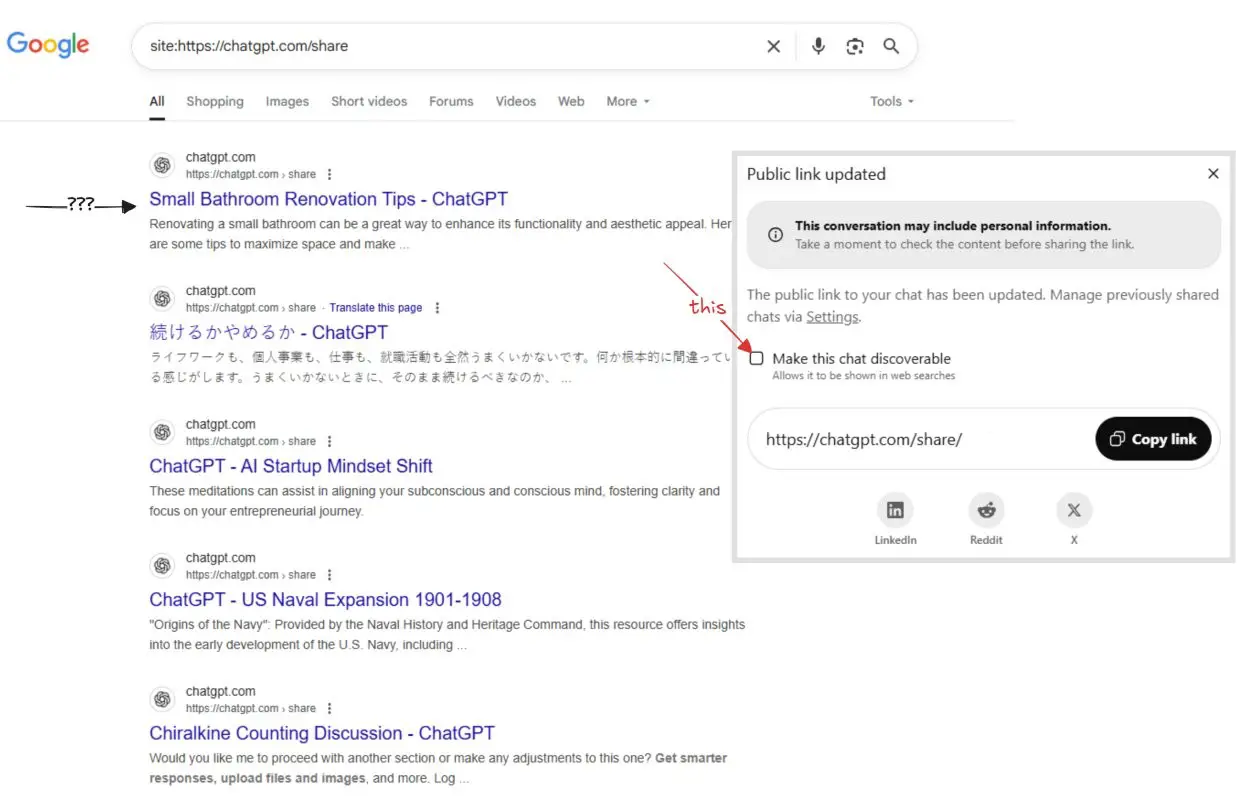
Image: wavefnx
Since Thursday, users began noticing that numerous ChatGPT conversation share links were appearing in Google search results, allowing anyone to view their contents. This sparked widespread criticism on social media, with many accusing ChatGPT of compromising user privacy.
By clicking on these links, individuals could directly access others’ interactions with ChatGPT—some of which contained private or sensitive information. In response to the backlash, OpenAI promptly disabled the feature and worked with Google to remove all indexed links.
It is important to clarify that this was not a security breach. OpenAI described the feature as a brief experiment, wherein ChatGPT invited users to create public links for sharing conversations on platforms like LinkedIn, Reddit, or X/Twitter.
During the link creation process, ChatGPT issued multiple warnings against sharing sensitive content. Users were required to click through several prompts and manually tick a checkbox to allow indexing by search engines. However, OpenAI appears to have overestimated the average user’s technical literacy—many either ignored the warnings or failed to grasp their implications.
As a result, a significant number of shared conversations containing real names, locations, and other personal data were made publicly accessible and indexed by Google. Anyone could retrieve them using a simple query like site:chatgpt.com/share. In one example, a user uploaded their résumé for refinement, unintentionally exposing sensitive personal details to the entire internet.
Following the public outcry, OpenAI’s security team acknowledged that the feature created too many opportunities for users to inadvertently share sensitive information. They conceded that the safeguards in place were inadequate and have since suspended the feature and purged all indexed content.
Related Posts:
- Google Unleashes “Search Live”: Converse with AI in Real-Time for Mobile Search
- Gemini Advanced Remembers: Google’s AI Gets a Memory Boost
- Malicious PyPI Packages Expose User Credentials
- AI’s Dark Side: Hackers Harnessing ChatGPT and LLMs for Malicious Attacks
Support Our Threat Intelligence
If you find our CVE report and cybersecurity news helpful, consider supporting our work.
 Buy Me a Coffee
PayPal
Buy Me a Coffee
PayPal
