Apple Unveils M5 Chip: 4X Faster GPU AI Performance, Powering New MacBook Pro, iPad Pro, and Vision Pro
 Do Son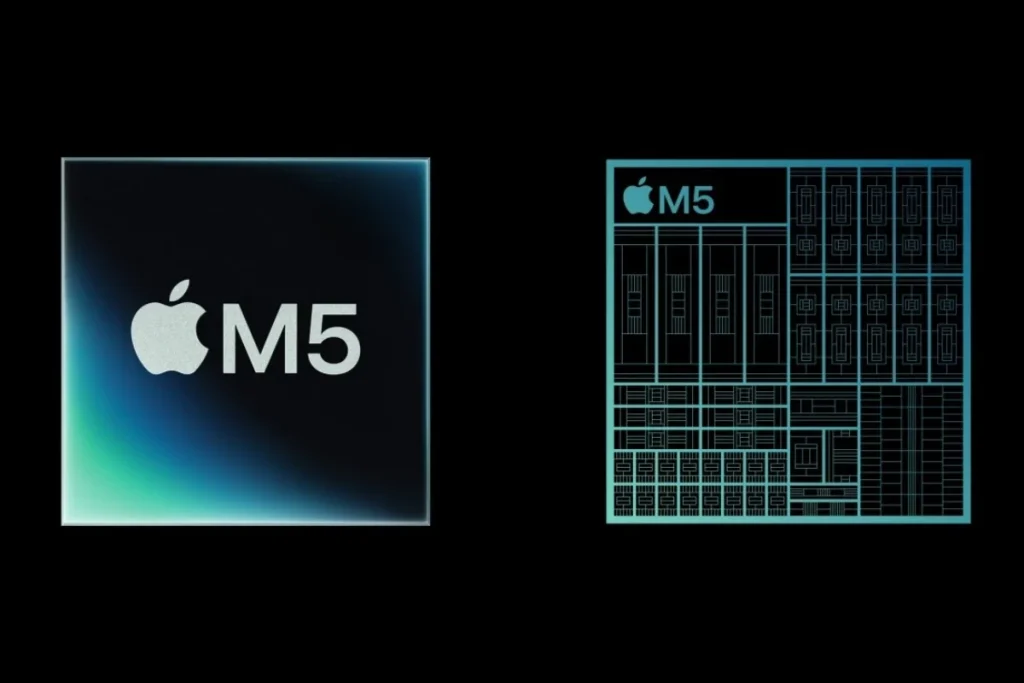
Apple has officially unveiled its next-generation M5 processor, heralding a significant leap in artificial intelligence performance. The new chip delivers more than a fourfold increase in peak GPU computational power compared to the M4, and will power the upcoming 14-inch MacBook Pro, iPad Pro, and Apple Vision Pro.
The M5 is built on TSMC’s third-generation 3nm (N3P) process technology and features a new 10-core GPU architecture, with each core integrated with a neural network accelerator. This design enables AI workloads running on the GPU to execute at far greater speeds, boasting more than four times the GPU performance of the M4 and over six times that of the M1.
Apple also claims the M5 features the world’s fastest performance cores, with a 10-core CPU configuration comprising six efficiency cores and four high-performance cores. The chip achieves up to a 15% boost in multithreaded performance compared to the M4, while its unified memory bandwidth has been increased by nearly 30%, reaching 153GB/s.
The new 16-core Neural Engine delivers enhanced AI computational efficiency and superior power management, working in tandem with the neural accelerators embedded in both the CPU and GPU. Together, they ensure the M5 can handle a wide spectrum of AI workloads with remarkable speed and efficiency.
In terms of graphics performance, the M5 achieves up to a 30% improvement over the M4, and a 2.5× increase over the M1. It also integrates a third-generation ray tracing engine, delivering up to 45% better rendering performance for ray-traced content. Meanwhile, the second-generation dynamic caching technology ensures smoother gameplay and more realistic visuals in 3D applications.
The M5’s architecture underscores Apple’s continued focus on on-device AI computing, particularly through the integration of neural accelerators within its GPU cores — a move that signals Apple’s intent to enable the GPU to handle a greater share of AI workloads and deliver higher computational throughput.
While competitors such as Qualcomm and Intel are also emphasizing AI performance, Apple appears determined to leverage its deep hardware-software integration to maintain an edge. The company’s strategy centers on optimizing AI capabilities across its entire ecosystem — from iPhone and iPad to Mac and Vision Pro — ensuring seamless performance and efficiency across all devices.
However, Apple has yet to disclose specific figures for the M5’s AI processing power, making direct comparisons with rival chips difficult. Still, the company’s emphasis on substantial performance gains over the M4 suggests that the M5 is designed to tackle increasingly complex AI models and workloads with unprecedented precision and speed.
Related Posts:
- Apple Hits Pause on iPadOS 18 for M4 iPad Pro Amid ‘Bricking’ Fears
- Apple Nears Mass Production of M5 MacBook Pro, New Studio Display; Launch Expected Early 2026
- New iPad Pro Rumored to Feature Dual Front Cameras & M5 Chip for Enhanced User Experience
Support Our Threat Intelligence
Find our tech and OS security coverage helpful? Support our work today and unlock a 100% ad-free reading experience!
 Buy Me a Coffee
