
 Do Son
A PoC exploit code and technical details have been made available for a zero-day flaw, tracked as CVE-2022-4262, affecting Google Chrome
Vulnerability

CVE-2024-23749, CVE-2024-25003, and CVE-2024-25004 exploit weaknesses in how KiTTY processes certain commands sent by remote servers.

CVE-2024-24806, with a CVSS score of 7.3, exposes a server-side request forgery (SSRF) vulnerability within the very core of libuv

A PoC for CVE-2024-20328, a critical vulnerability in ClamAV, that allows remote code execution, was published

Dubbed CVE-2024-23113 (CVSS 9.8), this flaw allow unauthenticated attackers to remotely execute code on affected devices.

CVE-2024-22394 exposes an improper authentication flaw, potentially allowing remote attackers to bypass authentication on affected devices

MalDocs leveraging old CVEs often evade detection due to their sophisticated evasion techniques. These techniques include encryption

CVE-2024-24821 casts a shadow over Composer's reliability, exposing users to potential code execution and privilege escalation threats

CVE-2024-21762 (CVSS 9.6), poses a significant risk, potentially enabling unauthenticated remote code execution on affected devices.

CVE-2024-23452 flaw that could potentially allow attackers to smuggle malicious requests through the bRPC's HTTP server.

ClamAV's developers issued critical patches addressing two vulnerabilities (CVE-2024-20328 & CVE-2024-20290) within the library
CVE-2024-20254 and CVE-2024-20255 affect devices with default configurations, amplifying the potential reach of the attacks

Glassy of EagleCloud, who found CVE-2024-20931, also provides technical details on the vulnerability, and publishes PoC code
initially disclosed in a security advisory update on September 5, 2023, this vulnerability carries a chilling CVSS score of 8.8

CVE-2023-7216 could allow a remote, unauthenticated attacker to orchestrate a scenario where an unsuspecting user

Assigned a CVSS score of 9.8, CVE-2024-23917 falls into the critical category, signaling a high risk of exploitability and impact

CVE-2023-6989 allowed for the inclusion of PHP files on a server by an unauthenticated attacker, leading to the execution of arbitrary PHP code

The vulnerabilities, encompassing a range of out-of-bounds write issues (CVE-2023-6229 through CVE-2023-6234 and CVE-2024-0244)

CVE-2024-0031 stands out for its potential to allow attackers to execute malicious code remotely on a victim's device

CVE-2024-23108 and CVE-2024-23109 could potentially allow remote, unauthenticated attackers to execute unauthorized commands
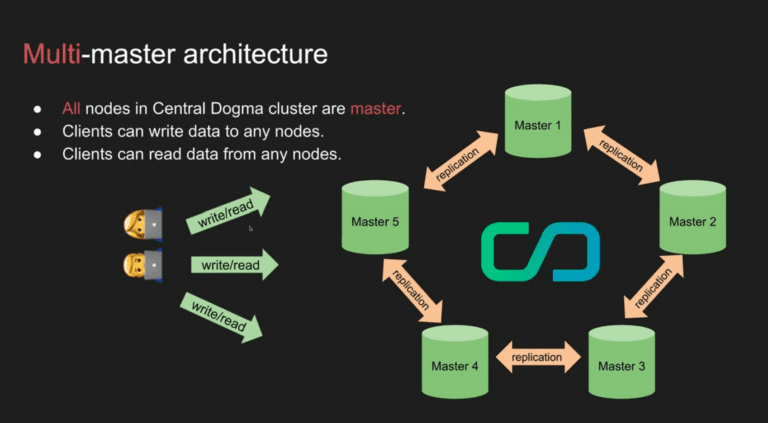
CVE-2024-1143 has been rated with the maximum severity score of 10.0, classifying it as Critical—the highest level of urgency.

A researcher has published a proof-of-concept (PoC) tool for a kernel vulnerability, CVE-2024-23208 remedied in iOS 17.3