
 Do Son
At the heart of this issue lies CVE-2023-49083, a vulnerability with a formidable Common Vulnerability Scoring System (CVSS) score of 9.1
Vulnerability

Recent research by Team82 has uncovered a series of vulnerabilities in various DICOM implementations, raising significant security concerns
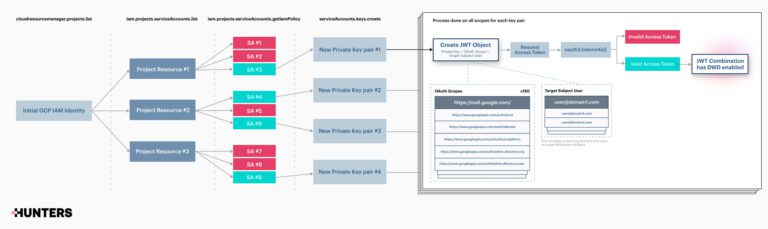
Hunters researchers dubbed the vulnerability "DeleFriend". The error enables an attacker to manipulate existing delegations

At the root cause of BLUFFS attacks are two novel vulnerabilities within the Bluetooth standard's session key derivation process.

This actively exploited flaw, tracked as CVE-2023-6345, could allow attackers to remotely execute code on affected devices.

A vulnerability, known as CVE-2023-46589, has emerged within the Apache Tomcat, a widely used Java web application server.

In the world of data visualization and business intelligence, Apache Superset stands out as a modern, enterprise-ready...

An attacker needs to trick the user into opening the malicious file to trigger the CVE-2023-38573 vulnerability.

GreyNoise, a cybersecurity agency, has observed mass exploitation of the CVE-2023-49103 vulnerability as early as November 25, 2023

Tracked as CVE-2023-31275 and assigned a worrying CVSS score of 8.8, the vulnerability was identified in version 11.2.0.11537 of WPS Office.

The second vulnerability, CVE-2023-47039, presents a more targeted threat, specifically for Perl on Windows systems.

The immediate, albeit inconvenient, recommendation is to consider alternative devices that do not harbor the CVE-2023-6304 vulnerability

Researchers highlight the increasing reliance on IoT devices, such as cow tracking collars, in the agricultural sector to improve efficiency

Security researcher Matei "Mal" Badanoiu disclosed the proof-of-concept (PoC) of a patched code execution vulnerability (CVE-2023-34212)

A recently discovered vulnerability in Apache DolphinScheduler, identified as CVE-2023-48796, poses a significant security risk

Microsoft has warned that successful exploitation of the CVE-2023-36041 vulnerability could grant the attacker high privileges

Blackwing Intelligence has unearthed several vulnerabilities that enable circumvention of the Windows Hello authentication system

CVE-2023-49103 (CVSS score of 10) Disclosure of sensitive credentials and configuration in containerized deployments

CVE-2023-41913 is a critical security vulnerability that could allow remote attackers to execute arbitrary code on affected systems

SonarSource have disclosed technical details for CVE-2023-36742 and a public proof-of-concept (PoC) exploit

CVE-2023-37924 allows malicious actors to bypass login authentication, potentially leading to unauthorized access to sensitive data

CVE-2023-22521 poses a significant threat to organizations utilizing Crowd, warranting immediate attention and remediation.