Critical Flaw in Livewire Exposes Laravel Apps to Stealthy RCE, PoC Releases
 Do Son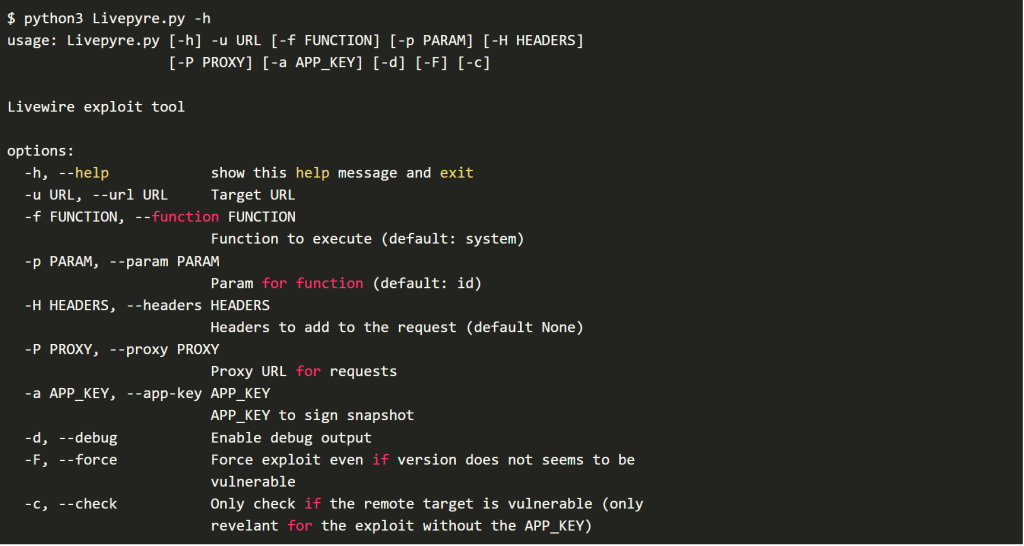
Developers relying on Livewire, a cornerstone framework for building dynamic interfaces in Laravel, are facing a severe security reality check. A deep-dive analysis by security firm Synacktiv has uncovered a critical vulnerability and a persistent design flaw that could allow attackers to execute arbitrary code on servers powering over 130,000 applications worldwide.
See a CVE's exploit risk spike before it becomes a headline.
Get EPSS spike alertsThe vulnerability, tracked as CVE-2025-54068, exploits Livewire’s internal “hydration” mechanism—the process used to sync state between the server and the browser. While a patch has been released, researchers warn that a fundamental design characteristic remains a ticking time bomb for applications with leaked credentials.
Livewire is massively popular, used in “over 30% of new Laravel projects” to create interactive frontends with minimal JavaScript. It works by “dehydrating” a component’s state into a serialized format sent to the client and “rehydrating” it when it comes back.
Synacktiv’s researchers discovered they could manipulate this process. By identifying a gadget chain involving PHP’s unserialize() behavior, they found a way to achieve “stealthy remote command execution”.
The core issue lay in how Livewire handled updates. “By default, if developers do not enforce strong typing on their component parameters, they will be vulnerable to type juggling,” the report explains. Attackers could send a specially crafted request that casts a simple integer counter into a malicious array, tricking the server into executing code.
Typically, Livewire protects its state with a checksum signed by the application’s APP_KEY. However, CVE-2025-54068 allowed attackers to bypass this requirement entirely.
“The discovery of CVE-2025-54068 further exposed a critical flaw: the ability to smuggle synthesizers via the updates mechanism, entirely bypassing the need for the APP_KEY,” the researchers stated.
This meant that even without the secret key, an attacker could inject malicious objects—specifically using a technique involving GuzzleHttp\Psr7\FnStream and destruct magic methods—to trigger remote code execution (RCE).
While the CVE-2025-54068 vulnerability has been patched in versions 3.6.4+, a darker risk remains. The research highlights that if an attacker does obtain the APP_KEY (a common occurrence due to leaks or default values), the application is essentially defenseless against RCE.
“The exploit version requiring the APP_KEY was not patched because it exploits the way Livewire is designed… Livewire team did not consider it as a security issue”.
Synacktiv argues that this stance underestimates the risk, noting that “being in possession of the APP_KEY on a newer than version 3 Livewire based application means you can fully compromise it”.
To demonstrate the severity of these flaws, Synacktiv has released a proof-of-concept tool named Livepyre. The tool automates the exploitation process, capable of checking for the vulnerability and deploying the payload.
“We developed Livepyre, a tool that streamlines exploitation with and without the APP_KEY,” the report confirms.
Upgrade Livewire to the latest version immediately to close the CVE-2025-54068 hole. However, the report concludes with a broader warning about the framework’s architecture.
“Livewire’s case is a stark reminder that innovative features, when built on loose typing and implicit trust, can become powerful exploit chains”.
Developers are urged to enforce strict typing on component properties and treat their APP_KEY as a crown jewel—because if it leaks, no patch will save them.
Related Posts:
- Laravel Flaw: Leaked APP_KEY Turns Into Remote Code Execution
- Exploiting Livewire: CVE-2024-47823 Puts Laravel Apps at Risk
- PoC Exploit Releases for Linux Kernel Escalate Privileges Flaw (CVE-2023-35001)
- ScriptCase Flaws (CVE-2025-47227/47228): Pre-Auth RCE & Admin Takeover Risk for Web Servers, PoC Published
Support Our Threat Intelligence
Find our vulnerability reports and weekly recaps helpful? Support our work today and unlock a 100% ad-free reading experience!
 Buy Me a Coffee
