Weaponizing Trust: FBI Warns Iran’s MOIS is Using Telegram as a Malware C2 Hub
 Do Son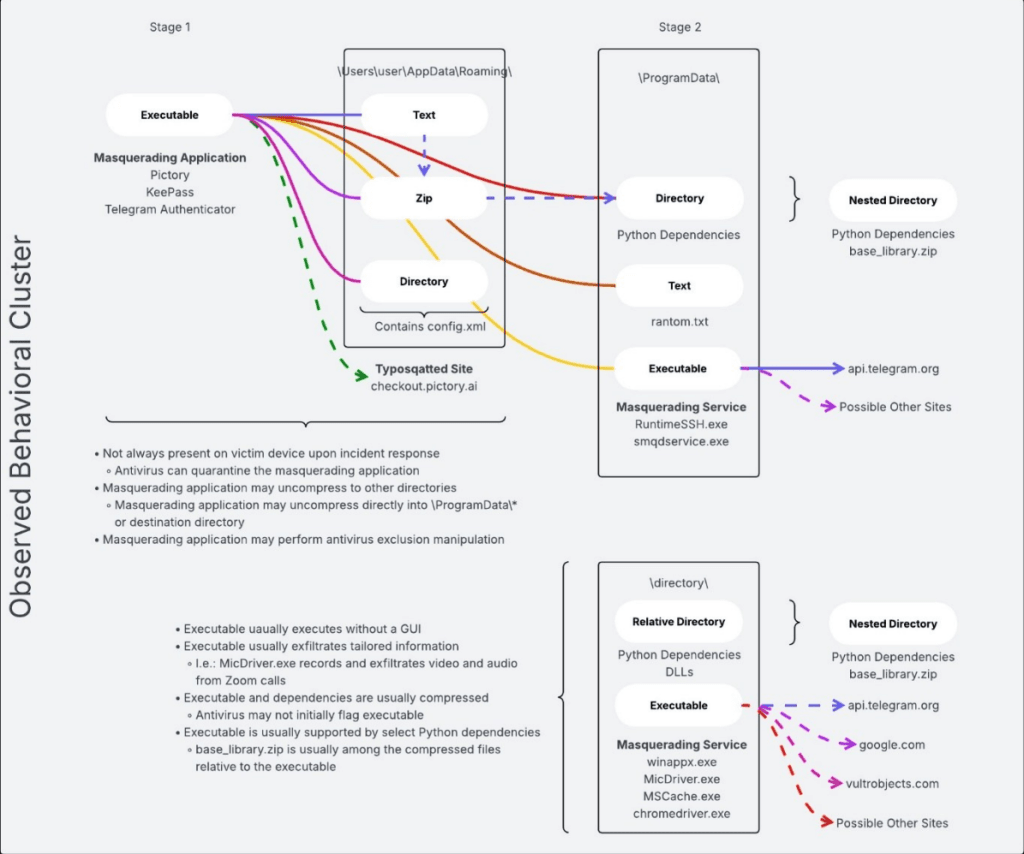
Observed Behavioral Cluster | Image: FBI
The Federal Bureau of Investigation (FBI) has issued a high-priority “FLASH” alert detailing a sophisticated cyber-intelligence operation conducted by the Government of Iran’s Ministry of Intelligence and Security (MOIS). The report reveals that Iranian state actors have successfully weaponized the popular messaging app Telegram, turning it into a clandestine Command-and-Control (C2) infrastructure to deploy malware and silence dissent.
The campaign specifically targets Iranian dissidents, opposition groups, and journalists around the world, signaling a sharp escalation in Tehran’s efforts to suppress digital opposition through technical means.
For many activists and journalists, Telegram is viewed as a secure alternative to state-monitored platforms. However, the FBI assessment warns that MOIS actors have found a way to exploit this trust. By utilizing Telegram as a C2 hub, the actors can push malicious payloads directly to identified targets under the guise of legitimate files or updates.
“Specifically, MOIS cyber actors are responsible for using Telegram as a command-and-control (C2) infrastructure to push malware targeting Iranian dissidents, journalists opposed to Iran, and other opposition groups around the world.”
Once the malware is executed on a target’s device, it grants the MOIS a digital foothold, leading to “intelligence collection, data leaks, and reputational harm against the targeted parties.”
The timing of the FBI’s disclosure is not coincidental. The agency noted that the elevated geopolitical climate in the Middle East has driven a surge in this type of state-sponsored activity.
The FBI warns that these tactics are not just about data theft; they are part of a broader “asymmetric” warfare strategy designed to intimidate and discredit those who speak out against the regime.
“Due to the elevated geopolitical climate of the Middle East and current conflict, the FBI is highlighting this MOIS cyber activity… This FLASH warns network defenders and the public of continued malicious cyber activity by Iran MOIS cyber actors.”
While the FBI’s alert focuses on the use of Telegram, the underlying malware often utilizes standard infection vectors to reach the victim’s device initially. These may include:
- Social Engineering: Posing as fellow activists or trusted news sources to share “confidential” documents.
- Automated Pushes: Using the Telegram API to manage and update malware already resident on a victim’s machine.
- Data Staging: Using Telegram channels or bots to exfiltrate stolen files, making the traffic blend in with normal app usage.
Recommended Mitigations:
- Strict File Hygiene: Never download or open files sent via Telegram from unverified sources, even if they appear to come from known contacts.
- Use Multi-Factor Authentication (MFA): Ensure that your Telegram account is secured with a strong password and two-step verification to prevent account hijacking.
- Endpoint Protection: Use robust mobile and desktop security software capable of detecting unusual process behavior associated with C2 communication.
- Network Monitoring: Defenders should monitor for unusual traffic patterns to Telegram’s known IP ranges, particularly if the volume of data being uploaded exceeds typical messaging usage.
Support Our Threat Intelligence
Find our threat intelligence and malware analysis helpful? Support our work today and unlock a 100% ad-free reading experience!
 Buy Me a Coffee
