Suspected Kimsuky Hackers Deploy NodeLinkRAT Malware via Reply-Based Spearphishing
 Do Son

TL;DR
Between June and October 2026, threat actors used a public note-sharing website to deliver evolving payloads. This culminated in a new JavaScript tool called NodeLinkRAT malware. Linked with moderate confidence to North Korea’s Kimsuky group, this Kimsuky NodeLinkRAT malware campaign tricked a South Korean seminar attendee by sending an email with a missing honorarium form. Once the target replied asking for the file, the attackers delivered a malicious Windows shortcut. Notably, this shortcut rotated between XenoRAT, cloud data stealers, and a persistent Node.js implant.
What Happened in the Spearphishing Campaign
On September 12, 2026, a threat actor impersonating a senior aide in a South Korean National Assembly member’s office sent an email to an individual who had attended a seminar on September 9. According to an investigation into NodeLinkRAT by the Genians Security Center (GSC), the email requested an honorarium payment application form. However, the sender omitted the attachment on purpose.
“The next day, the victim replied, ‘There is no attachment’. This was the response the threat actor had been waiting for. Having effectively requested the file first, the victim would open the subsequent attachment without suspicion,” GSC researchers wrote. The attacker then sent a ZIP archive via a webmail large-attachment link. This archive contained a shortcut file (.hwp.lnk) whose remote icon path pointed to a GitHub repository (norrisk983/hukushima).
Fileless LNK Loader and aNotepad C2
When opened, the LNK file ran a hidden PowerShell window that reconstructed an obfuscated command by replacing identifiers (z0 through z13) in reverse order. This command used curl.exe to fetch a polymorphic second-stage script from a South Korean free web hosting server (epaper.dothome.co.kr). Next, the script extracted and opened a legitimate HWP honorarium decoy form. It then deleted the original LNK file, and dropped a VBScript (j1u3ulqPQeRHnA.Jcu) and PowerShell script (UPA.ps1) into the %APPDATA% folder.
To maintain access, the script registered a scheduled task named CommonMaintenanceHost that ran UPA.ps1 every 38 minutes. Each time it ran, UPA.ps1 connected to the legitimate online note-sharing service anotepad.com. After connecting, it extracted Base64 text hidden between the markers 887wgJs8 and nfJgcBI. It then executed the decoded commands in memory.
From XenoRAT to NodeLinkRAT
By editing the text on the public note page, the operators switched their post-exploitation tools five times between June and October 2026. On June 18, the note delivered an in-memory .NET XenoRAT variant. This variant was disguised as MSOfficeServer (Updater.exe) communicating with 103.81.116.10. On September 18 and September 27, the operators replaced the note with scripts. These scripts enumerated antivirus software, Telegram folders, and recent files. Next, files were uploaded as logs to Dropbox and MEGA Cloud (via an unattended install of MEGAcmd). On September 28, the note shifted to stealing Office, PDF, HWP, and image files. These files were sent directly to oppsite.dothome.co.kr.
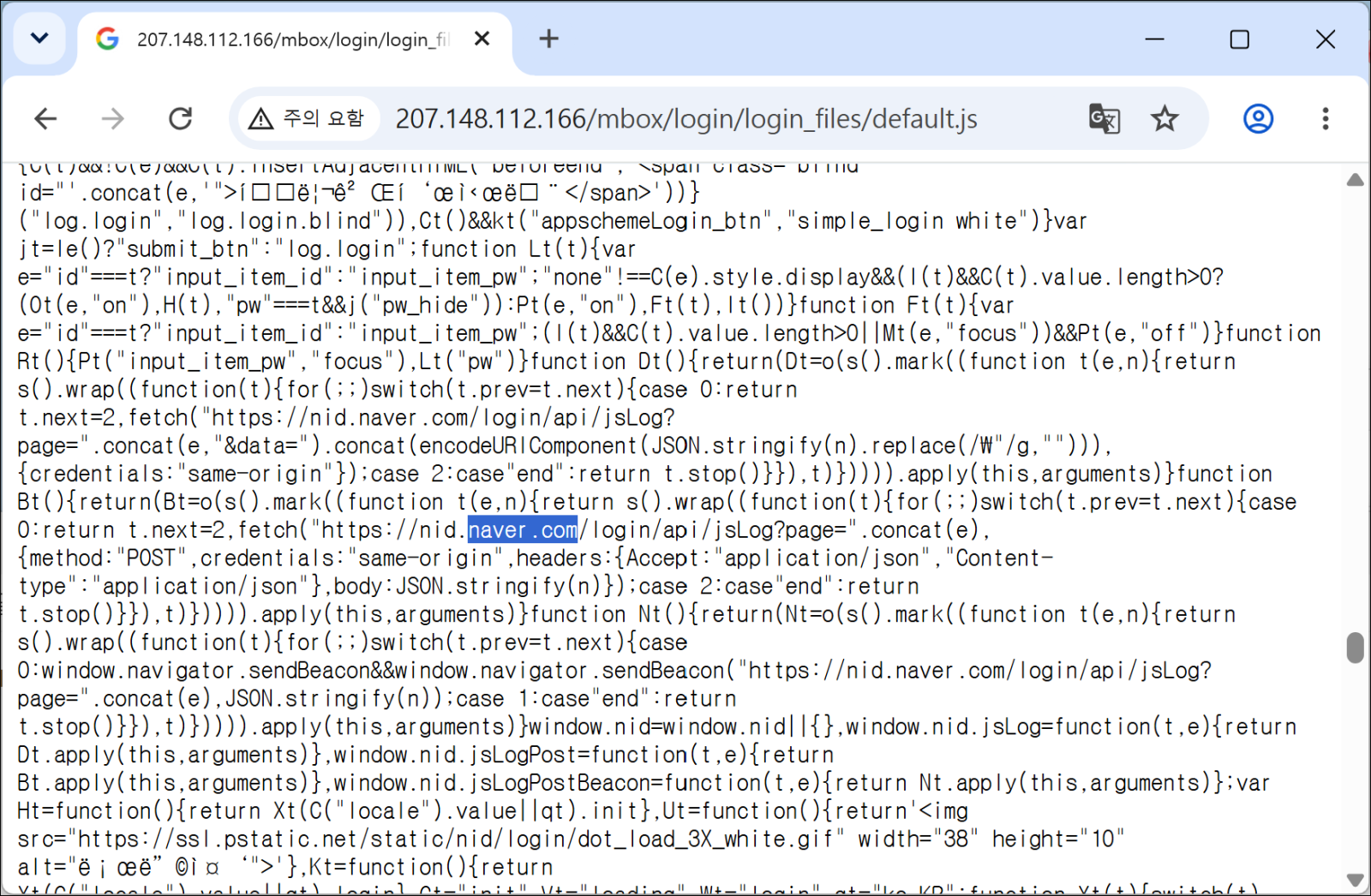
Finally, on October 16, the note deployed NodeLinkRAT malware. The script downloaded the official Windows Node.js runtime (node-v24.21.0-win-x64.zip) from nodejs.org and extracted it to C:\Users\Public\Musicjs. After installing the npm packages socket.io-client, screenshot-desktop, and ps-node, it created an empty marker file named unins000.dat and dropped a script called teamview.js. Connecting to 207.148.112.166:3000 over Socket.IO with a hardcoded AES-256-GCM key, the tool allowed attackers to run shell commands. Furthermore, it allowed them to steal files and capture live desktop screenshots.
Who Is Behind the Activity
GSC attributes the Kimsuky NodeLinkRAT malware campaign to the North Korea-linked Kimsuky group with moderate confidence by combining four distinct lines of evidence. First, a Dropbox account used in a related aNotepad campaign was registered to c0653159@gmail.com. This address was previously used in 2025 phishing attacks against South Korean specialists working on North Korean affairs.
Second, the attackers hosted NAVER MYBOX phishing kits that matched a December 2024 Kimsuky campaign on the 185.27.134.0/24 subnet. Third, all three recovered XenoRAT samples shared a custom project GUID (200b1ad6-f1ff-49de-aa9c-b07d2615cdec). Fourth, the operators used a South Korean free domain service (nid.weffm.p-e.kr) mimicking NAVER’s login address. This is a tactic frequently seen in North Korean operations.
Impact and How Organizations Can Stay Protected
“In particular, the actor can switch attack tools simply by changing the contents of the note page, making it difficult to understand the full attack from code or C2 addresses observed at a single point in time,” GSC warned. Because three separate victim identifiers appeared on the September 18 note page at once, investigators confirmed the attackers managed multiple compromised targets simultaneously.
Recommended Defense Steps
Because NodeLinkRAT malware runs inside an officially signed node.exe binary and exfiltrates data through legitimate cloud services like Dropbox and MEGA, static file signatures often miss the intrusion. Therefore, defenders must monitor endpoints for the CommonMaintenanceHost scheduled task, and check %LOCALAPPDATA%\MEGAcmd for unauthorized installations. Next, audit C:\Users\Public\Music for rogue njs folders, unins000.dat markers, or teamview.js scripts. Finally, security teams should retain initial PowerShell execution logs and use behavior-based endpoint detection. This approach will block scripts that periodically poll public note-sharing sites like anotepad.com.
Support Our Threat Intelligence
Find our threat intelligence and malware analysis helpful? Support our work today and unlock a 100% ad-free reading experience!
 Buy Me a Coffee
