Under Active Attack: Nginx UI’s Critical 9.8 Vulnerability Exploited in the Wild
 Do Son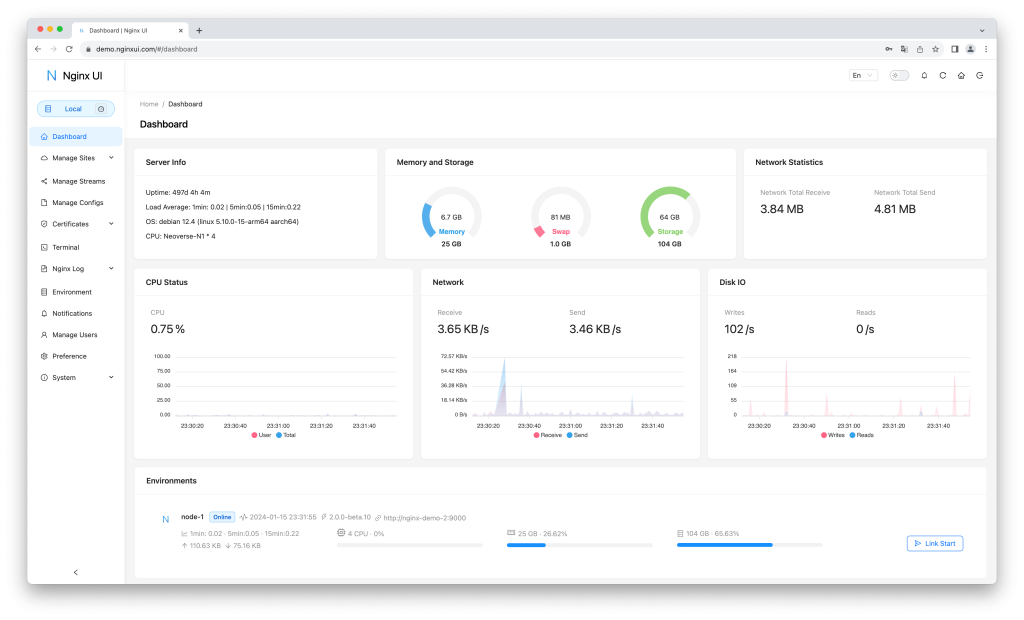
The popular web-based management interface, Nginx UI, is under fire following the public disclosure of a critical security flaw. Identified as CVE-2026-33032, this vulnerability carries a CVSS score of 9.8, signaling a catastrophic risk for servers worldwide.
Even more concerning for the cybersecurity community is that full details of the vulnerability and a proof-of-concept (PoC) exploit code have been publicly released while no official patch is currently available.
Nginx UI is designed to simplify Nginx management through a sleek interface built with Go and Vue, featuring AI-powered ChatGPT assistance and performance monitoring. However, a fundamental oversight in its Model Context Protocol (MCP) integration has left the front door wide open.
The integration uses two HTTP endpoints: /mcp and /mcp_message. While the former is protected by authentication, the /mcp_message endpoint relies solely on an IP whitelist. In a dangerous design choice, the system’s default IP whitelist is empty, which the software’s middleware interprets as “allow all”.
This oversight allows any network attacker to “invoke all MCP tools without authentication,” effectively giving them the keys to the kingdom.
Because the details and the PoC are now in the wild, the risk of “complete nginx service takeover” is immediate. An unauthenticated attacker can leverage this flaw to:
- Intercept Traffic: Rewrite server blocks to proxy traffic through attacker-controlled endpoints to capture credentials and session tokens.
- Exfiltrate Configurations: Read all existing Nginx configs, revealing sensitive backend topology and upstream server data.
- Harvest Credentials: Inject custom logging directives to capture Authorization headers from administrators.
- Disrupt Services: Take Nginx offline by writing invalid configurations and triggering a reload.
The report confirms that all versions of Nginx UI are currently vulnerable. Despite the severity and the public availability of exploit code, there are no patched versions available at this time.
Security researchers are urging administrators to take manual action. The primary fix involves adding the AuthRequired() middleware to the /mcp_message route to ensure it is no longer publicly accessible. Additionally, developers are encouraged to change the IP whitelist’s default behavior from “allow-all” to “deny-all” when unconfigured.
Until an official update is released, users are advised to restrict network access to their Nginx UI instances or manually implement the suggested code changes to prevent a total server compromise.
Update: April 16th
Following a process of responsible disclosure, the security flaw was mitigated with the launch of version 2.3.4. This news coincides with a report released this week by Recorded Future, which identified CVE-2026-33032 as one of 31 vulnerabilities leveraged in active attacks throughout March 2026. While its inclusion in the report confirms its use by threat actors, specific details regarding the nature of the exploitation activity remain unavailable at this time.
Support Our Threat Intelligence
Find our vulnerability reports and weekly recaps helpful? Support our work today and unlock a 100% ad-free reading experience!
 Buy Me a Coffee
