North Korean “StegaBin” Campaign Targets Developers with Steganographic Malware
 Do Son
Cybersecurity researchers at Socket have uncovered a sophisticated multi-stage malware operation, dubbed “StegaBin,” specifically designed to harvest credentials and secrets from software developers. Attributed to the North Korean-aligned threat actor FAMOUS CHOLLIMA, the campaign utilized 26 malicious npm packages to infiltrate development environments. This group is closely linked to the Lazarus Group and is notorious for its “Contagious Interview” attacks, where operators pose as recruiters to trick developers into executing malicious code.
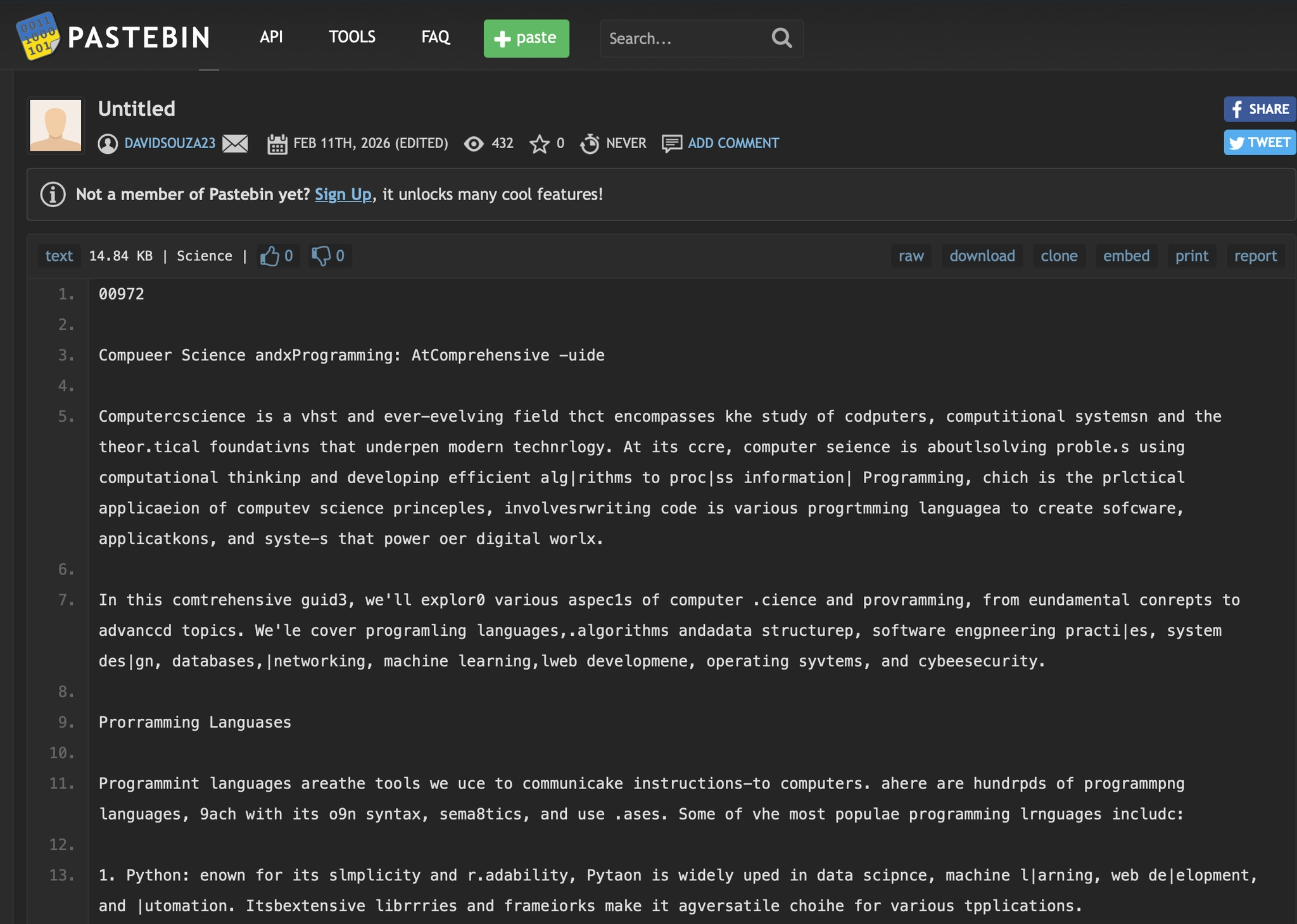
The hallmark of StegaBin is its creative use of character-level steganography to hide its command-and-control (C2) infrastructure. Rather than hardcoding detectable server addresses, the malware retrieves seemingly innocent computer science essays from Pastebin. As the Socket report details, “The loader extracts C2 URLs steganographically encoded within three Pastebin pastes, innocuous computer science essays in which characters at evenly-spaced positions have been replaced to spell out hidden infrastructure addresses”. This method allowed the attackers to resolve infrastructure hosted across 31 separate Vercel deployments while evading standard security filters.
To lure victims, the attackers published typosquatted versions of popular libraries like express, fastify, and lodash, often adding a -lint suffix to appear as legitimate developer tooling. A particularly deceptive tactic involved including the legitimate library as a dependency within the malicious package. Socket researchers noted that “By proxying the legitimate package into the environment, a victim’s project might still compile and run normally after an accidental installation,” which ensures that “the application doesn’t immediately break” and “the developer remains unaware of the mistake while the malicious install script executes the infection chain in the background”.
Once the initial infection is successful, the malware deploys a robust nine-module toolkit designed for deep-system exfiltration. These modules “target developer environments directly, including VSCode configuration, SSH keys, git repositories, browser credential stores, clipboard data, and locally stored secrets”. The toolkit includes a range of specialized tools, such as:
- VSCode Persistence: Uses a “186-space whitespace trick” to hide malicious shell commands off-screen in tasks.json, ensuring the malware re-infects the host every time a folder is opened.
- Keylogger & Clipboard Stealer: Polls the clipboard every 500ms and utilizes low-level keyboard hooks on Windows, Linux, and macOS to capture sensitive input.
- Crypto Wallet Stealer: Targets 86 different cryptocurrency wallet extension IDs, including MetaMask and Phantom, to drain digital assets.
- TruffleHog Scanner: Automatically downloads and runs the legitimate TruffleHog secret-scanning tool to find leaked API keys across the entire filesystem.
By simulating a compromised host, Socket’s team was able to capture the full automated post-exploitation suite. Developers are encouraged to audit their node_modules and remain vigilant against unsolicited “technical assessments” from unknown recruiters.
Support Our Threat Intelligence
Find our threat intelligence and malware analysis helpful? Support our work today and unlock a 100% ad-free reading experience!
 Buy Me a Coffee
