
 Do Son
Unlock the power of Threat Intelligence with free access to real-world attack data from ANY.RUN's innovative platform.
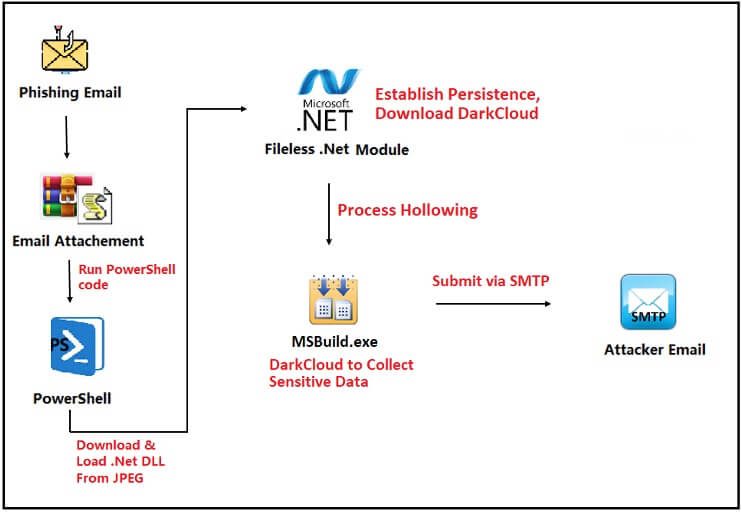
Fortinet uncovers a new DarkCloud stealer variant using a fileless, multi-stage attack chain with obfuscated PowerShell and process hollowing to evade detection and exfiltrate data.

Google is ending support for Steam on Chromebooks. The beta program will conclude on January 1, 2026, though cloud and Android gaming options remain.

Tesla is dissolving its Dojo supercomputer team, ending its in-house chip project. The company will now focus on external partnerships to power its AI ambitions.

Microsoft is rolling out GPT-5 support for Visual Studio Code via GitHub Copilot. The new model promises smarter and faster coding for paid subscribers.

Microsoft's Windows 10 ESU program offers one more year of security updates for $30, but you can get it for free by using Windows Backup or Bing Rewards.

OpenAI’s Codex CLI now allows direct login with a ChatGPT account, letting developers use their subscription quotas without paying extra API fees.

CloudSEK warns of a surge in Raksha Bandhan-themed phishing, fake websites, and UPI scams in India. Attackers use courier lures, fake e-stores, and social engineering to steal money.

PyPI is implementing new restrictions to reject problematic ZIP archives and protect against "parser confusion" attacks, which could bypass security checks and smuggle malicious files.

CISA warns of critical flaws in EG4 Electronics inverters (CVSS up to 9.2), allowing attackers to install malicious firmware, hijack control, and disrupt power generation.

Android Studio Narwhal is now stable, introducing AI Agent Mode for complex tasks, new XR development tools, the K2 Kotlin compiler by default, and compatibility checks for 16KB pages.

Socket uncovers a long-running supply chain attack on RubyGems. A threat actor published 60 malicious gems stealing credentials from grey-hat marketers.

GitLab researchers uncovered a crypto scam on PyPI. Typosquatted Bittensor packages hijacked staking functions to silently drain users' crypto wallets.

Unit 42 uncovers DarkCloud Stealer's new evasion tactics, including heavily obfuscated JavaScript/WSF loaders and a final VB6 payload that injects into RegAsm.exe to bypass detection.

A critical Ruby JWE vulnerability (CVE-2025-54887, CVSS 9.1) allows attackers to bypass authentication tag validation in AES-GCM, potentially leading to data decryption and integrity loss.

OpenAI has released GPT-5, touting major advances in reasoning, speed, and coding. The new model is now available to developers and enterprise customers.

Microsoft's new AI assistant, Copilot for Gaming, is now in beta for Xbox Insiders. It provides in-game hints, answers questions, and recommends games.

The UCIe 3.0 standard has arrived, doubling chiplet data speeds to 64 GT/s. This open standard is set to revolutionize AI and high-performance computing.

Android 16's new Advanced Protection Mode adds a USB security feature that may require you to unlock your phone to enable fast charging.

The Browser Company, creators of the discontinued Arc browser, have launched a new AI browser called Dia, with a $20/month subscription for unlimited AI access.

Elon Musk's xAI plans to incorporate paid ads into Grok's responses to cover high computing costs. The move raises questions about neutrality and trust.

Socket uncovers 11 malicious Go packages, including 8 typosquats, on GitHub. The packages deliver stealthy, in-memory payloads that compromise developer machines and CI pipelines.