
 Do Son
Since August 2024, a financially motivated threat group has been targeting Indonesian and Vietnamese Android users with...
Latest news

In June 2025, a new ransomware group known as Kawa4096 surfaced, launching disruptive attacks against multinational organizations...

A new report from Hunt Intelligence reveals how attackers are abusing ConnectWise ScreenConnect (formerly ConnectWise Control) to...

A new study from Catalyst has exposed a sophisticated cyber espionage campaign conducted by Subtle Snail (UNC1549),...

The Black Lotus Labs team at Lumen Technologies has uncovered major new infrastructure behind the SystemBC botnet,...

According to Microsoft’s list of known issues updated on September 19, 2025, Windows 11 version 24H2 encounters...

Windows 11 does not yet natively support setting videos as desktop backgrounds. For years, many users have...

MediaTek has officially unveiled its new flagship computing platform, the Dimensity 9500, built on TSMC’s third-generation 3nm...

In recent years, Apple has vigorously advanced its strategy of self-developing chips, evolving from the A-series and...

A new study from a ZeroSalarium security researcher sheds light on a new technique to bypass endpoint...

Dubbed as CVE-2023-26369, this nefarious zero-day vulnerability stems from an out-of-bounds write weakness.
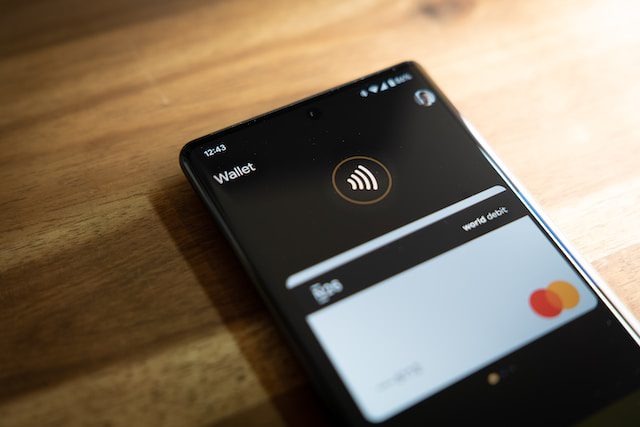
The CVE-2023-35671 vulnerability allows an attacker to read the full card number and expiry details from a locked device

A severe 0-day vulnerability, affecting an array of older Apple devices, has forced the tech giant to go back in time, rolling out patches for gadgets

Truck drivers have one of the most important jobs in the US. From transporting commercial goods to...

Identified as CVE-2023-4863, the vulnerability traces its origin to a heap buffer overflow in the WebP image format

Jakabakos has shed light on the specifics of the CVE-2023-27524 flaw and provided a PoC, accentuating its potential for remote code execution

By using specially crafted file, an attacker could exploit the CVE-2023-41330 vulnerability to execute arbitrary code on the system.

With a CVSS score of 9.8, CVE-2023-30908 allows an attacker to bypass authentication and gain unauthorized access to HPE OneView

The first vulnerability (CVE-2023-40029, CVSS score of 9.9) allows an attacker to view the full contents of a cluster secret.

The vulnerabilities, tracked as CVE-2023-41064 and CVE-2023-41061, were found in the ImageIO and Wallet frameworks

The CVE-2023-20269 vulnerability lies within the remote access VPN feature of Cisco’s renowned ASA and FTD software

A series of vulnerabilities, ripe for exploitation, have surfaced in Apache Superset. These span from remote code execution risks

The vulnerability, known as CVE-2023-20238, is an authentication bypass vulnerability, with a maximum CVSS score of 10

To exploit the CVE-2023-4498 vulnerability, an attacker would need to send a specially crafted web request to the router.

Remote attackers, even without privileges, can exploit the CVE-2023-39238 flaw to execute remote code, perform arbitrary actions on the device

Web accessibility is not just a mere checklist to complete – it’s about extending the power of...

It’s no secret that regulatory compliance and security requirements add complexity to IT processes, but configuration and...

CVE-2023-28562 (CVSS score of 9.8) allows malicious actors to execute arbitrary code on a staggering range of Qualcomm chipsets

CVE-2023-40031 (CVSS score of 7.8): heap buffer write overflow in `Utf8_16_Read::convert`. This issue may lead to arbitrary code execution
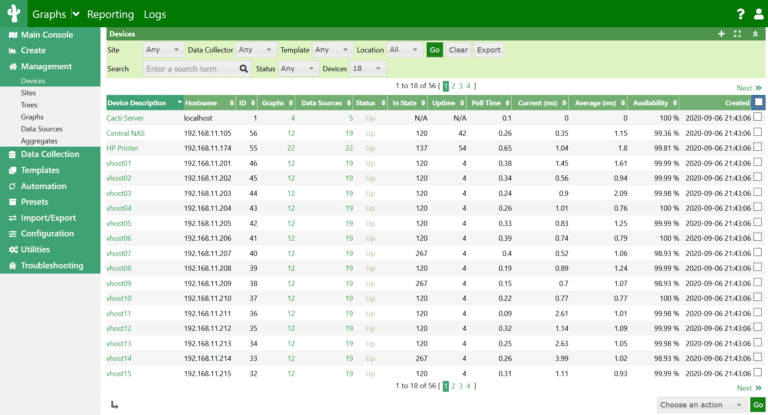
This vulnerability, designated as CVE-2023-39361, is a grave SQL injection bug, sporting a worrisome CVSS score of 9.8.
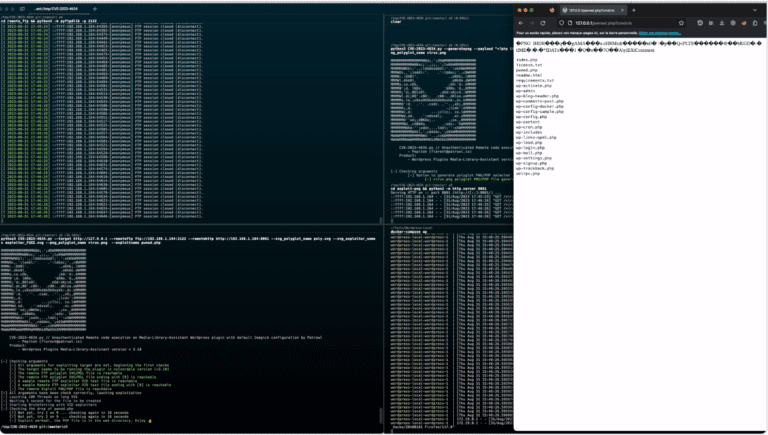
CVE-2023-4634 is an unauthenticated RCE vulnerability affecting the Media-Library-Assistant plugin – a tool with over 70,000 installations

CVE-2023-35674 could significantly elevate local privileges, all without the need for any user interaction or additional execution privileges