
 Do Son
Halcyon's research team has identified a new ransomware group dubbed "Volcano Demon," responsible for a series of recent attacks
ransomware
Ransomware is malware that encrypts or steals an organization’s data and then demands payment to restore access or keep the files private. Modern groups rarely stop at encryption. Most now use double extortion. They copy sensitive data first. Then they threaten to publish it on a leak site if the victim refuses to pay.
This tag collects our daily coverage of the ransomware ecosystem. You will find reports on new strains and their encryptors, leak-site claims, attacks on hospitals, schools, manufacturers and local governments, and law-enforcement actions such as Operation Cronos against LockBit. We also track the affiliate model, where developers rent their tools to partners who break in and deploy the payload.
Initial access is the part defenders can control most. Many recent campaigns began with an unpatched VPN or firewall, a stolen password without multi-factor authentication, or a remote access tool left open to the internet. For that reason, we link ransomware stories to the vulnerabilities behind them. When a group starts exploiting a flaw, you will usually see it here and in our CISA KEV coverage at the same time.
How should you read these reports? First, check whether the entry point affects your own stack. Next, review the listed indicators and tactics, which often map to MITRE ATT&CK techniques. Then test your backups. Offline, immutable backups remain the single best way to recover without paying. Finally, rehearse your incident response plan, because the first hours of an attack decide most of the damage.
We write every article from a defensive angle. We do not host samples, builders or leak data. Instead, we point to vendor advisories, government alerts and detection guidance that help security teams act quickly.
Articles below are sorted from newest to oldest. Older entries remain useful for history, but always check the latest vendor guidance before you act. Our editors update major incidents as new facts emerge.
Related topics include zero-day exploits, infostealers that feed stolen credentials to ransomware crews, and phishing campaigns that still open many doors.

RansomHub attackers gained initial access by exploiting the Zerologon vulnerability (CVE-2020-1472), which grants domain administrator privileges
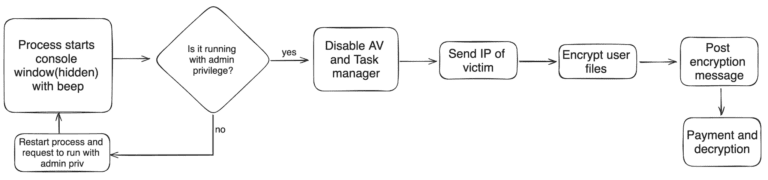
The Evil Ant ransomware, written in Python and compiled using PyInstaller, targets a wide array of files in a victim's folders

GRIT Ransomware Annual Report 2023 concludes with a forward-looking perspective, anticipating continued evolution in ransomware tactics

The Danish Centre for Cyber Security (CFCS) is warning of increased ransomware activity, exploiting CVE-2023-20269, a vulnerability

Carbanak malware, previously utilized for stealing banking data, is now employed by the cybercriminal group FIN7 for remote control

In 2024, the cyber threat landscape is not just a technical challenge; it is a test of our collective resilience and adaptability.

A staggering 26,447 vulnerabilities were disclosed in 2023, surpassing 2022's total by over 1,500 CVEs.

2023 witnessed a significant shift in the tactics and approaches of cyber attackers, influenced by global conflicts and advancements in technology

The report, covering June to August 2023, documents over 3.3 million cyberattacks, equating to about 26 attacks per minute.

LockBit 3.0, an advanced ransomware, has been exploiting a critical vulnerability dubbed "Citrix Bleed" (CVE-2023-4966)

Utilizing its distinctive ransomware, the Ragnar Locker group had been linked to assaults on significant infrastructural entities

According to a recently published report by the NCC Group, this past September marked a historic peak in ransomware incidents

Over recent weeks, the governmental servers of the Philippines have been severely compromised by an onslaught of cyberattacks

In a stark reminder of the constantly evolving cyber threat landscape, September 2023 witnessed a formidable ransomware attack on the automation giant

A bounty has been placed on Russian ransomware developer Mikhail Matveev under the U.S. Treasury Department's Transnational Organized Crime Rewards Program

Rapture shares similarities with the Paradise ransomware, such as the RSA key configuration file and the requirement of a .NET 4.0 framework
Microsoft Defender for Endpoint incorrectly flagged Microsoft Office updates as malicious, saying a potential ransomware behavior
Ransomware isn’t new; but, unfortunately, this particular type of cyber crime has been accelerating in the recent...
According to the US Long Beach local media Press-Telegram July 24, 2018 report, China Ocean Shipping Co....