 Do Son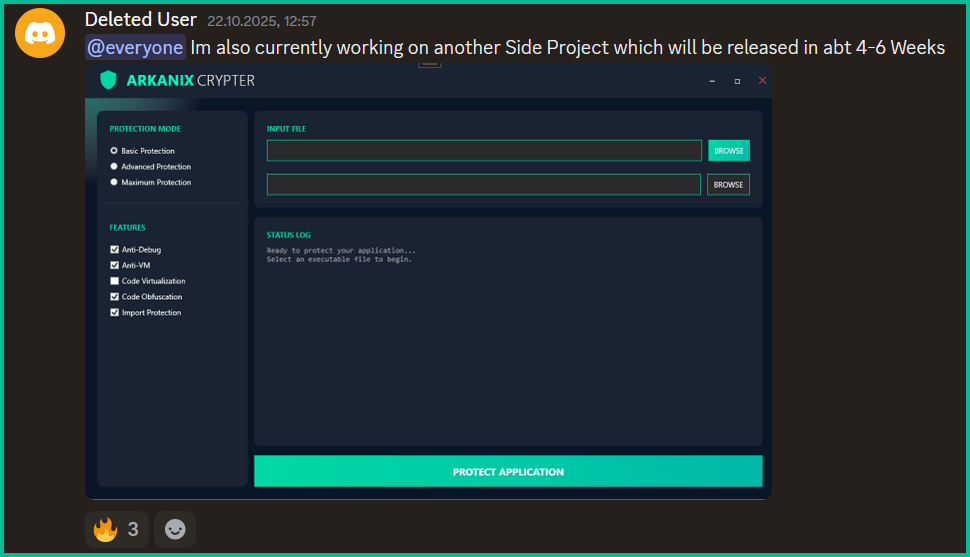
The cybercrime underground is increasingly mirroring the legitimate tech industry, adopting customer-centric marketing, tiered subscriptions, and even artificial intelligence to accelerate product development. A recent analysis by Kaspersky Labs into a newly discovered threat known as the “Arkanix Stealer” provides a fascinating glimpse into the modern Malware-as-a-Service (MaaS) economy.
First spotted in October 2025, Arkanix burst onto the scene with a polished pitch and a diverse set of data-stealing capabilities.
The developers behind Arkanix operated like a highly engaged startup. Kaspersky researchers noted that the malware “operated under a MaaS (malware-as-a-service) model, providing users not only with the implant but also with access to a control panel featuring configurable payloads and statistics”.
To build their community, the attackers relied heavily on a dedicated Discord server, “which serves as the primary communication channel between the author and the users of the stealer”. The developers engaged their “clients” with transparency. They “decided to address the public, implementing a forum where they posted development insights, conducted surveys and even ran a referral program where you could get bonuses for ‘bringing a friend'”.
“Referrers were promised an additional free hour to their premium license, while invited customers received seven days of free ‘premium’ trial use”.
As the Kaspersky report succinctly points out, “This behavior makes Arkanix more of a public software product than a shady stealer”.
Arkanix was a highly capable threat. The developers offered two distinct versions of the malware to maximize its reach and evasion capabilities.
The premium offering was “a native C++ version of the stealer”. This variant boasted advanced capabilities tailored for maximum impact, equipped to steal from web browsers, VPN clients, Discord, and Telegram. It heavily targeted the gaming community, designed to siphon credentials from major platforms like Steam, Epic Games Launcher, and Riot.
Alongside the C++ build, researchers “also discovered Python implementation of the stealer capable of dynamically modifying its configuration”. Because the “Python version was often packed,” it provided the attackers with “multiple methods for distributing their malware”.
Analysts found that the malware “contains probable traces of LLM-assisted development which suggests that such assistance might have drastically reduced development time and costs”. By leveraging Large Language Models to rapidly generate code structures, the threat actors were able to spin up a sophisticated operation with minimal overhead.
Because AI drastically lowered the barrier to entry and the cost of development, the creators didn’t need to maintain the malware for years to turn a profit.
“Hence it follows that this campaign tends to be more of a one-shot campaign for quick financial gains rather than a long-running infection,” the analysis concludes.
By the time security teams began dissecting the threat, the operators had already took down. “The panel and the Discord chat were taken down around December 2025, leaving no message or traces of further development or a resurgence”.
Related Posts:
- Next-Gen Stealer Arkanix Bypasses Chrome App-Bound Encryption Using C++ Process Injection
- Malicious PyPI Packages Expose User Credentials
- Malicious PyPI Package Targets Discord Developers with Token Theft and Backdoor Exploit
- Russia Bans Discord Over Illegal Content Concerns
Support Our Threat Intelligence
Find our threat intelligence and malware analysis helpful? Support our work today and unlock a 100% ad-free reading experience!
 Buy Me a Coffee
