Google Search Redesign Hides Option to Dismiss Ads, Forcing Users to Scroll Past ‘Sponsored Results’ Blocks
 Do Son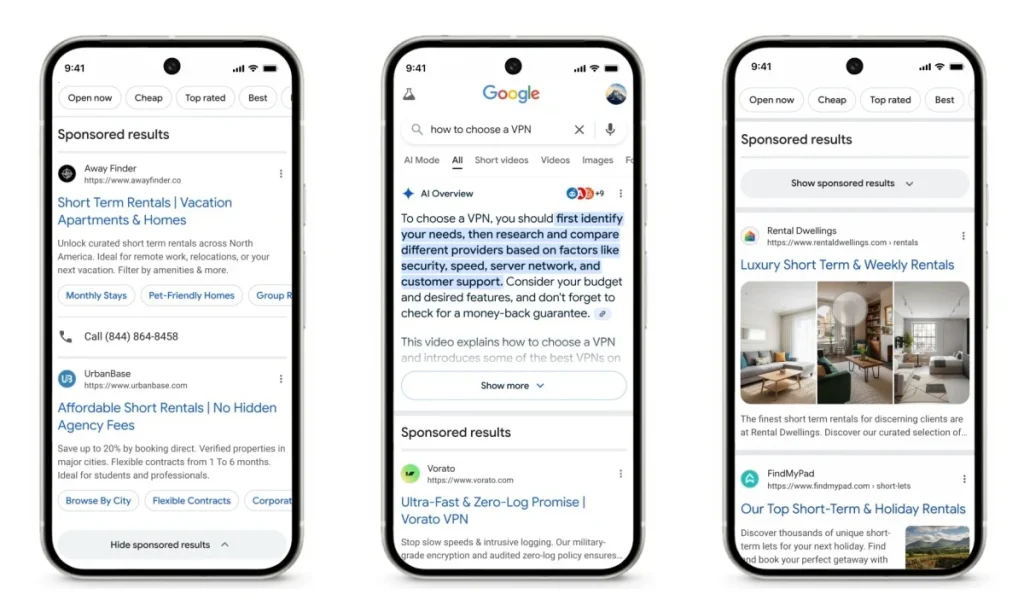
In an effort to increase click-through rates on search advertisements, Google has once again modified its ad display format, making “Sponsored Results” sections more difficult to ignore — and, in some cases, requiring users to scroll past them before they can be manually hidden. A similar “Sponsored Results” block will also appear at the bottom of search pages, which likewise must be scrolled over before it can be dismissed.
Under the new layout, all text-based ads will be consolidated into a single “Sponsored Results” section at the top of the search results page. Google emphasized that each block will display no more than four ads, with the ad size itself remaining unchanged. However, users must scroll through the entire section before they are able to tap a button to hide all sponsored listings.
According to Google, this redesign aims to make it easier for users to navigate and view the top portion of the search page. Yet it may also reflect the reality that many users have grown accustomed to skipping over top-of-page content, including AI-generated summaries, and scrolling directly to organic results further below.
Google’s own explanation confirms that sponsored results may appear above or below AI overview sections, meaning users will still need to scroll through multiple layers of content to reach their desired results. To further prevent users from “missing” ad placements, Google has also added another “Sponsored Results” block at the bottom of the search page, which must likewise be scrolled over before it can be manually hidden.
This change is already being rolled out worldwide across both mobile and desktop platforms.
It is clear that Google’s latest adjustment is primarily intended to boost ad engagement and sustain a vital source of revenue, though it may once again compromise user experience, forcing users to spend more time navigating around promotional content.
Even though Google insists that no more than four ads will appear per block, concentrating all advertisements at the top and adding another at the bottom effectively makes it harder for users to avoid them — and increases the likelihood of accidental clicks that redirect to advertiser pages.
Such a move highlights Google’s ongoing struggle to balance revenue generation with user experience. As more people habitually skip over top-of-page content, Google appears intent on reshaping its interface to keep ads visible for longer. Whether this approach will improve engagement or drive users toward alternative search platforms remains an open question worth watching.
Related Posts:
- Your AI Summary Will Have Ads: Google Integrates Sponsored Content into Search
- Circle to Search Gets an Upgrade: Now It Can Translate as You Scroll
- Apple Unifies OS Versions to “26” and Unveils “Liquid Glass” Redesign
Support Our Threat Intelligence
Find our tech and OS security coverage helpful? Support our work today and unlock a 100% ad-free reading experience!
 Buy Me a Coffee
