NetSupport RAT Returns: Weaponized via WordPress & “ClickFix” for Remote Access
 Do Son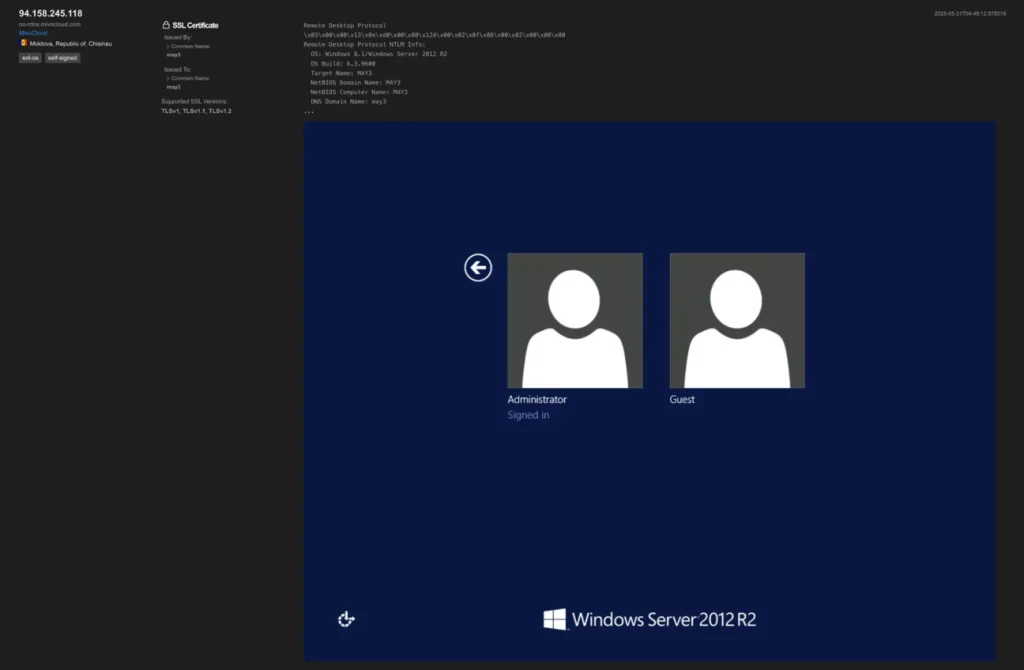
Recently, security researchers at the Cybereason Global Security Operations Center (GSOC) discovered a highly deceptive malware campaign that leverages compromised WordPress sites, phishing lures, and a fake CAPTCHA interface to trick victims into deploying a weaponized version of the legitimate NetSupport Manager Remote Access Tool (RAT).
“Threat actors have been hosting malicious WordPress websites to deliver malicious versions of the legitimate NetSupport Manager Remote Access Tool (RAT),” the report begins.
This multi-stage attack begins with users being redirected to malicious websites via:
- Phishing emails
- Embedded links in PDF attachments
- Game-related websites

Upon visiting a compromised site, a hidden iFrame injects a JavaScript (j.js) from the malicious domain islonline[.]org. When active, this script performs system checks—identifying the browser and device type—and then injects a secondary iFrame that leads to a PHP file (index.php), which dynamically loads another script (select.js) responsible for crafting the fake CAPTCHA interface.
“While appearing as a human verification step, the page employs navigator.clipboard.writeText(nE.command) to copy a malicious command to the user’s clipboard,” Cybereason explains.
This sneaky trick—coined the ClickFix technique—instructs users to paste and run the copied command using Win + R, thereby launching the infection manually.
When the clipboard command is executed, it downloads a password-protected ZIP archive and silently extracts a staged NetSupport deployment to %AppData%\Roaming. The archive includes:
- client32.exe: NetSupport RAT client
- remcmdstub.exe: Remote command prompt stub
- client32.ini: Configuration file linking the infected device to the attacker’s NetSupport Gateway
To maintain persistence, the malware creates a Windows Registry Run key, while the initial archive is deleted to cover tracks.
“The batch file includes large comment blocks filled with junk data between the commands… likely an obfuscation technique designed to evade inspection,” notes the Cybereason team.
The attackers’ NetSupport Gateway servers reside within the 94.158.245.0/24 subnet, registered to MivoCloud SRL in Moldova. These hosts expose TCP ports 3389 (RDP) and 443 (HTTPS), signaling public accessibility and remote administration capabilities.
Shodan scans revealed that the NetSupport servers were running Windows Server OS, further linking the threat infrastructure to live, attacker-controlled environments.
Once the NetSupport client is activated, threat actors use its built-in features to:
- Transfer files to public folders
- Launch applications remotely
- Execute commands via remcmdstub.exe
Cybereason observed attackers using NetSupport to run reconnaissance commands like: net group /domain “Domain Computers”. This command reveals all Active Directory computer accounts, helping adversaries map the environment for lateral movement or privilege escalation.
Although NetSupport Manager is a legitimate IT support tool, its robust feature set has increasingly made it a favored backdoor for cybercriminals.
“According to a recent report, NetSupport Manager was the seventh most prevalent threat in 2024… it is frequently referred to as a malicious Remote Access Trojan due to its widespread exploitation,” the report notes.
Related Posts:
- Cybereason Uncovers Widespread Exploitation of Apache ActiveMQ Vulnerability
- Hackers are trying to install NetSupport Remote Access Tool on victim machine through Fake Software Update
- Cisco Talos Warns of Stealthy NetSupport RAT Campaigns
- NetSupport RAT Wielded in Escalating Cyber Attacks: Educational Institutions, Government Agencies, and Service Businesses at Risk
- Cuckoo Spear Threat Alert: APT10 Targets Japan’s Critical Infrastructure
Support Our Threat Intelligence
Find our threat intelligence and malware analysis helpful? Support our work today and unlock a 100% ad-free reading experience!
 Buy Me a Coffee
