Tor Meets Docker: Sophisticated Crypto-Mining Campaign Hijacks Misconfigured APIs
 Do Son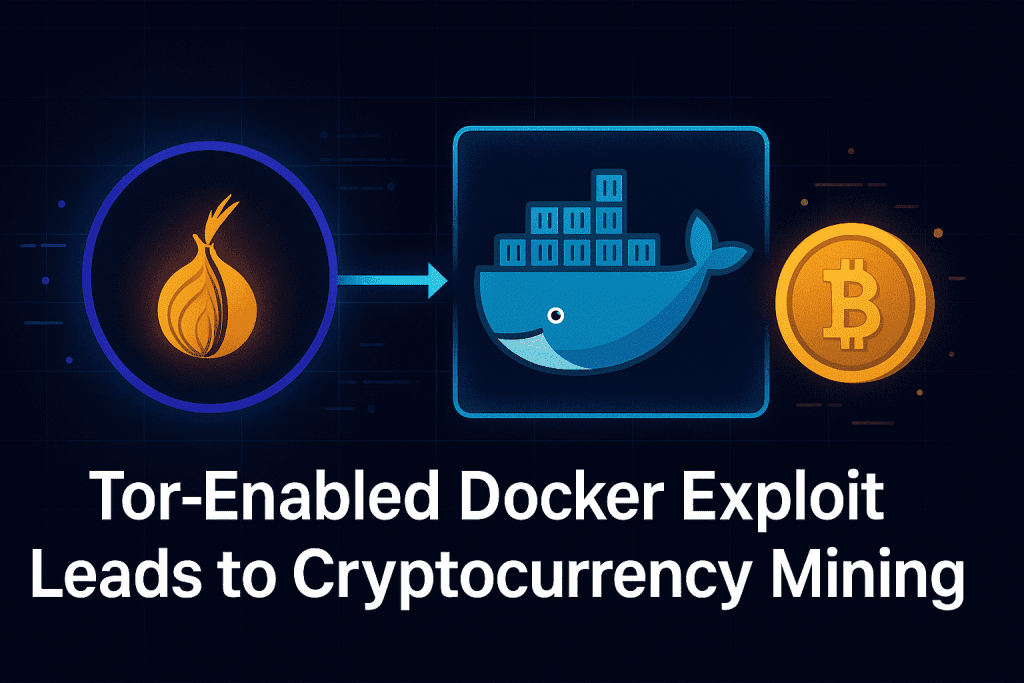
Trend Micro researchers have uncovered a stealthy new attack method that fuses misconfigured Docker remote APIs with the anonymity of the Tor network, allowing cybercriminals to deploy cryptocurrency miners and establish persistent access—all while flying under the radar of security controls.
“Cybercriminals have developed a clever new attack that combines Docker’s remote API with the Tor anonymity network to secretly mine cryptocurrency on victim systems,” Trend Micro reported.
This technique exemplifies the growing intersection of cloud-native exploitation and anonymized infrastructure abuse, with specific focus on Docker deployments vulnerable to public exposure.

The attack initiates when adversaries scan for exposed Docker Remote APIs—services that, when misconfigured, allow unauthenticated access to containerized environments. Upon finding a vulnerable instance, the attacker sends a POST request to create a new container based on the “alpine” image, but with a twist:
“The attacker creates a container… and mounts the host root ‘/’ into the container using (/:/hostroot:rw), a common tactic to access or manipulate the host system.”
This container then executes a base64-encoded script that sets up Tor and fetches a second-stage payload hosted on a hidden .onion domain.
Once inside, the attacker modifies the host’s SSH configuration to establish persistence:
- Enables root login and public key authentication
- Inserts an attacker-controlled SSH key into authorized_keys
Installs tools like:
- masscan for network scanning
- libpcap for packet capture
- zstd for efficient payload compression
- torsocks for anonymous traffic routing
“The attacker uses ‘socks5h’ to route all traffic and DNS resolution through Tor for enhanced anonymity and evasion,” the report explains.
The next phase involves sending system information back to the C2 server hosted on a .onion address. The attacker then downloads a Zstandard-compressed binary tailored to the target’s architecture using torsocks and decompresses it on the host.
This binary is a dropper containing the XMRig miner, along with all necessary configuration details, including wallet address, mining pool, and execution parameters.
“This dropper includes all wallet addresses, mining pool URLs, and execution arguments… minimizing external dependencies and aiding in evasion.”
While this exploit is technically feasible on any misconfigured Docker host, Trend Micro notes increased targeting of technology firms, financial services, and healthcare organizations—sectors known for cloud-native deployments.
Related Posts:
- Tor Network Thwarts IP Spoofing Attack
- Mozilla Confirms Active Attacks on Tor Browser via Firefox Vulnerability
- Sophisticated Linux Malware Campaign Targets Misconfigured Cloud Services
- Microsoft Defender no longer considered Tor Browser as a trojan
- Evolving Cryptojacking Campaign Targets Misconfigured Kubernetes Clusters
Support Our Threat Intelligence
Find our threat intelligence and malware analysis helpful? Support our work today and unlock a 100% ad-free reading experience!
 Buy Me a Coffee
