Shadows of the North: Unmasking the Sprawling Cyber Infrastructure of the DPRK
 Do Son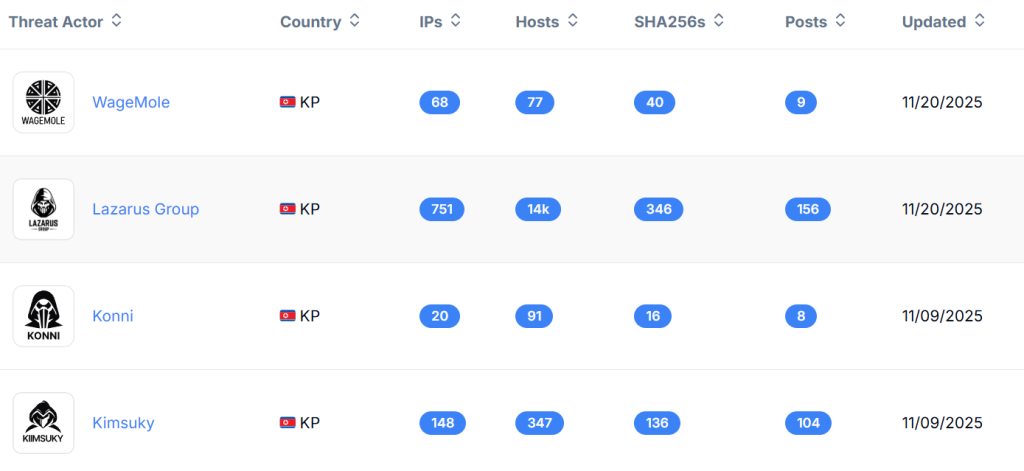
Overview of DPRK operational IOCs | Image: Hunt.io
A new collaborative investigation has exposed the intricate and overlapping infrastructure powering North Korea’s most notorious cyber operations. Researchers from Hunt.io and the Acronis Threat Research Unit have joined forces to map the operational backbone of the Democratic People’s Republic of Korea (DPRK), revealing a complex ecosystem where espionage, financial theft, and destructive intent collide.
The joint report sheds light on how distinct threat groups like Lazarus, Kimsuky, and Bluenoroff—often viewed as separate entities—actually share a unified, utilitarian logistical web.
While the cybersecurity community often categorizes North Korean threat actors into neat boxes based on their targets (Lazarus for money, Kimsuky for intelligence), the reality on the ground is far messier. The investigation uncovered a pragmatic sharing of resources that blurs the lines between these groups.
“Groups like Lazarus, Kimsuky, and other subgroups make up the DPRK threat ecosystem, each running its own playbook ranging from espionage and financial operations to destructive activities,” the report states . “Despite differences in each group’s playbook and motivation, they often share toolkits such as credential harvesting tools, exhibit similar infrastructure patterns, and rely on comparable delivery lures”.
The investigation went beyond simple malware analysis, focusing instead on the servers and networks that sustain these operations. Researchers successfully surfaced “clusters of operational assets that had not been connected publicly before,” exposing the machinery that keeps the DPRK’s hacking engine running .
The findings were significant. The team identified:
- Active tool-staging servers: Hubs used to deploy malicious software.
- Credential theft environments: Infrastructure designed to harvest login details at scale.
- FRP tunneling nodes: Specialized servers used to mask traffic and bypass firewalls.
- Certificate-linked infrastructure: A web of servers tied together by shared SSL/TLS certificates.
“These findings help outline how different parts of the DPRK operational infrastructure continue to intersect across campaigns and provide defenders with clearer visibility into the infrastructure habits these actors rely on”.
One of the key technical victories of this research was the ability to pivot from one known asset to uncover entire unknown clusters. By analyzing host data, such as the Hostwinds LLC node shown in the report, researchers traced connections into Bluenoroff-linked activity—a subgroup infamous for its attacks on financial institutions and cryptocurrency exchanges.
The report highlights a critical lesson for defenders: North Korean operators are creatures of habit. “Across their multiple campaigns over the years, DPRK threat actors follow consistent operational patterns that make their activity detectable despite evolving malware and lures”.
By mapping these habits, Hunt.io and Acronis have provided the security community with a blueprint to better anticipate and block the next wave of attacks from the Hermit Kingdom.
Related Posts:
- Critical Flaws in Acronis Cyber Protect Expose Sensitive Data: CVSS 10 Vulnerabilities Patched
- DPRK IT Workers: A Global Threat Expanding in Scope and Scale
- Server-Side Phishing Campaign Evades Detection, Targets Employee Portals
- Millions Stolen: North Korea Hackers Target Blockchain Industry
Support Our Threat Intelligence
Find our threat intelligence and malware analysis helpful? Support our work today and unlock a 100% ad-free reading experience!
 Buy Me a Coffee
