The AI Evolution of Mobile Malware: SURXRAT V5 Combines Surveillance, Ransomware, and LLMs
 Do Son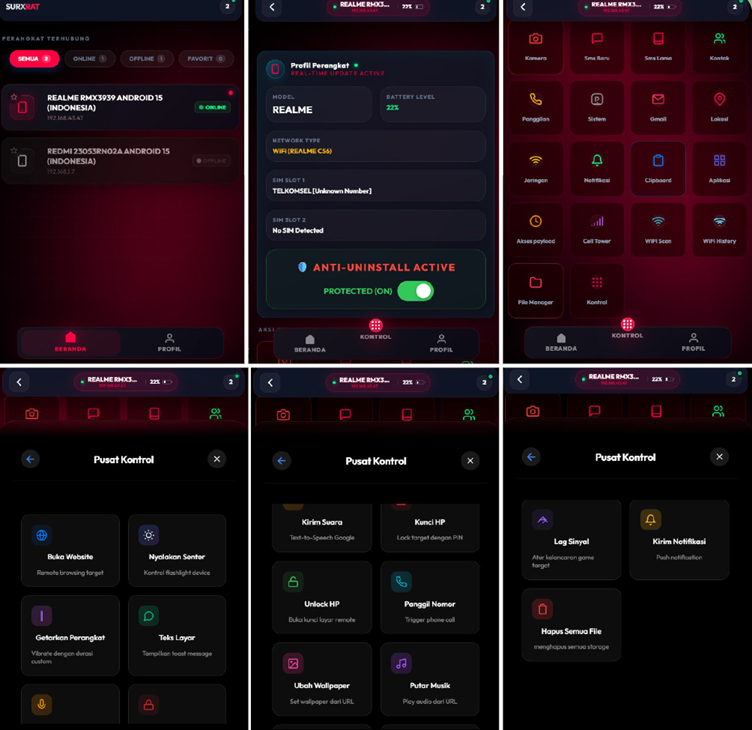
SURXRAT admin panel
The Android malware landscape is undergoing a significant transformation, shifting away from simple data theft toward professionalized, modular platforms that combine surveillance with aggressive monetization. A new technical analysis by Cyble Research and Intelligence Labs (CRIL) has unmasked a sophisticated new player in this space: SURXRAT.
Marketed under the “SURXRAT V5” branding, this Remote Access Trojan (RAT) is not just a tool for lone hackers; it is a commercially distributed powerhouse within a burgeoning Malware-as-a-Service (MaaS) ecosystem.
SURXRAT represents the increasing maturity of the mobile threat economy. The developers have adopted a business model that mirrors legitimate software franchises.
“The malware is marketed using structured reseller and partner licensing tiers, allowing affiliates to generate and distribute customized builds while the operator maintains centralized infrastructure and operational control,” the CRIL report explains. This allows the core developers to focus on technical scalability while an army of affiliates handles the actual distribution.
While code similarities suggest that SURXRAT evolved from the ArsinkRAT family, its current capabilities far exceed its roots. It operates as a full-featured surveillance platform capable of real-time remote control and extensive data exfiltration.
However, the most dangerous aspect of SURXRAT is its flexibility. The malware uses accessibility permissions to gain persistent control and can pivot its strategy based on the victim. “The integration of ransomware-style locking into a surveillance RAT indicates hybrid monetization, allowing operators to switch between espionage, fraud, and direct extortion based on the value of the victim,” the researchers noted.
In a forward-looking move that signals the next stage of mobile warfare, CRIL researchers identified SURXRAT samples that appear to be testing the waters of artificial intelligence.
“We have identified the latest samples that conditionally download a large LLM module, indicating experimentation with AI-assisted capabilities, device performance manipulation, and alternative monetization strategies alongside traditional surveillance and extortion activities,” the analysis reveals.
While the specific implementation of the AI module is still being explored, its presence alone marks a major milestone. “The observed experimentation with large AI model integration further indicates that threat actors are actively exploring emerging technologies to enhance operational effectiveness and evade detection,” CRIL explains.
SURXRAT relies on a robust, cloud-based command-and-control (C2) infrastructure built on Firebase to manage its fleet of infected devices. This allows for real-time interaction, such as capturing screenshots, recording audio, or even logging failed unlock attempts to a remote database.
The report concludes that SURXRAT is a prime example of the “increasing accessibility of advanced mobile attack capabilities to a broader cybercriminal audience”. As these threats become more modular and professionalized, the need for improved behavioral detection and user awareness of accessibility permission abuse has never been more critical.
Support Our Threat Intelligence
Find our threat intelligence and malware analysis helpful? Support our work today and unlock a 100% ad-free reading experience!
 Buy Me a Coffee
