 Do Son
A new report from Bitdefender has revealed a troubling resurgence in LummaStealer activity, proving that even coordinated law enforcement action isn’t enough to keep a profitable malware operation down. Less than a year after a major disruption attempt in 2025, the prolific information-stealing malware is back, bigger than ever, and pivoting to new tactics that target human psychology rather than software bugs.
The research highlights a “surge” in infections driven not by complex zero-day exploits, but by social engineering tricks that fool users into infecting themselves.
LummaStealer, which operates on a Malware-as-a-Service (MaaS) model, has shifted its focus entirely to the user. Bitdefender researchers note that the malware’s survival strategy relies on “social engineering rather than by the exploitation of technical vulnerabilities”.
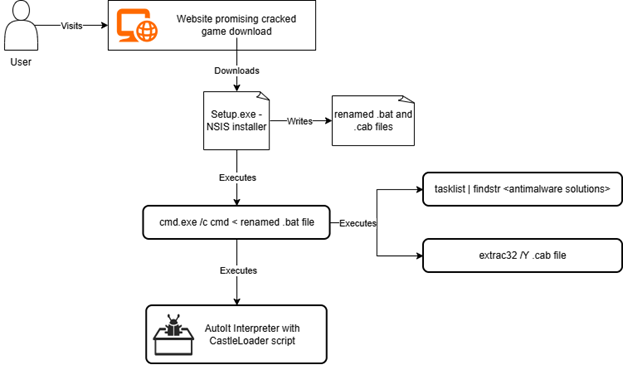
The most prominent of these new tactics is the “ClickFix” technique. This method uses fake CAPTCHA prompts to trick users into copying and pasting malicious code directly into their terminal.
“Recent campaigns increasingly employ fake CAPTCHA (‘ClickFix’) techniques, converting normal users’ web interactions into direct command execution on victim systems,” the report explains.
By masking the infection chain as a routine security check or a “fix” for a website error, attackers are bypassing traditional security filters that look for malicious file downloads.
Behind the scenes, the operation relies heavily on CastleLoader, a sophisticated delivery tool that helps the malware evade detection. “At the core of many of these campaigns is CastleLoader, which plays a central role in helping LummaStealer spread,” Bitdefender notes.
This loader allows the attackers to maintain a flexible infrastructure, quickly swapping out payloads and command-and-control servers to stay one step ahead of defenders.
Despite the crackdown in 2025, LummaStealer operators demonstrated remarkable resilience by “rapidly migrating to new hosting providers and adapting alternative loaders and delivery techniques”.
The continued success of the operation underscores the limitations of purely technical takedowns. As long as there is a market for stolen credentials, groups like LummaStealer will find a way to operate.
“Effective defense against LummaStealer requires more than signature-based detection or infrastructure takedowns,” the researchers conclude. “Because the infection chain depends on user interaction, prevention must emphasize user awareness, behavioral monitoring, and rapid response to credential compromise”.
Related Posts:
- Fake Cloudflare Verification Prompts Deliver LummaStealer Trojan Through Infected WordPress Sites
- LummaStealer: The Evolution of a Sophisticated MaaS
- LummaStealer Expands Attack Surface with Fake Booking Sites and CAPTCHA Tricks
- Massive Ad Fraud Campaign Deployed 331 Apps, Resulting in 60 Million Downloads
Support Our Threat Intelligence
Find our threat intelligence and malware analysis helpful? Support our work today and unlock a 100% ad-free reading experience!
 Buy Me a Coffee
