Skip to content
October 1, 2026
  • Bluesky
  • Facebook
  • Linkedin
  • Mastodon
  • RSS
  • Twitter
  • Youtube

Daily CyberSecurity

Zero-hour alerts. Unmatched analysis.

Primary Menu
  • Home
  • CVE Data
    • CVE Watchtower
    • Top Exploited CVEs
    • CVE Stats by Vendor
    • Q2 2026 Report
    • CVE Alerts
    • CVE Alert Settings
    • Pricing
  • Cyber Criminals
  • Data Leak
  • Free Tools
    • CVSS 3.1 Calculator
    • Certificate Viewer
    • DNS Lookup
    • Encoder & Hash Generator
    • IP / Subnet Calculator
    • Whois Lookup
  • Linux
  • Malware
  • Vulnerability
  • Submit Press Release
  • Weekly Recap
Light/Dark Button
  • Home
  • Technique
  • Free vs paid VPN: is there a difference?
  • Technique

Free vs paid VPN: is there a difference?

Do Son December 3, 2022 4 minutes read
tech-vpn

The cost of being ignorant about one’s cybersecurity in today’s world of hackers, data leaks, and malicious activities on the internet is huge. Make no mistake, ignorance will not exempt you from the consequences of a breach in your data privacy. Many people go the extra mile to boost their digital security because it is very important to keep all the sensitive information on our devices out of the prying eyes of ‘never-do-wells.’

Choosing to use a VPN is a smart digital security move. Whether free or paid VPN, it shows an effort to boost your safety on the internet, which is very commendable. If you are wondering how the VPN guarantees your privacy and keeps your data safe in the digital space, the information below is for you.

VPN: What is it and how does it work?

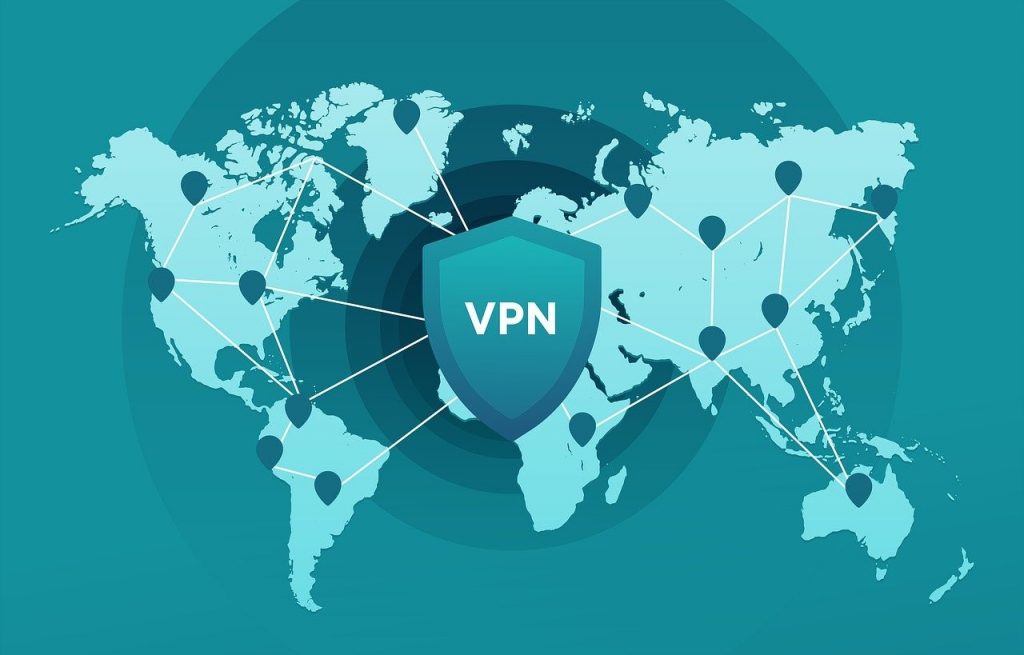
A VPN (Virtual Private Network) is a private network that ensures security by using encryption over a public network like hotel Wi-Fi or your home internet provided by your ISP. With a VPN, you get to browse the internet without revealing your true identity. It is pretty much like wearing a mask to be anonymous for your safety’s sake. Aside from concealing your IP (Internet Protocol) address or online identity to ensure privacy, you are able to use Wi-Fi in public places without fear of hackers.

How does a VPN work? Using a VPN is often as easy as clicking a couple of buttons but there is a whole process that happens behind the curtains. As soon as you turn on your VPN, a server takes it up from there and reroutes your internet activities via your VPN’s IP address, thereby concealing your location and your real identity. Hence, browsing via a VPN, encrypts your traffic and ensures no one can see your online activities. Aside from security and privacy, people also opt for VPNs in order to access restricted content like country-specific shows on Netflix or mobile banking services. 

Another reason why people use VPNs is to protect themselves from despotic governments that restrict freedom of speech. In Russia, China, and the United Arab Emirates, the use of VPNs is thwarted by state laws. However, in other countries of the world VPNs are legal and can be used to guarantee safety from hackers, prevent being spied on by anyone (even your ISP), and keep your devices secure. As you decide to opt for a VPN to enjoy these advantages, you will be faced with the decision to choose between a paid and free VPN. If you wonder what differentiates these two, read on to find out. 

What is the difference between Free VPN and Paid VPN?

The simplest distinguishing factor between a free and a paid VPN is that you can get VPN services at no monetary obligation when using a free VPN while you will have to make a monthly or annual financial commitment to use a paid VPN. However, there is more to this. What a free VPN offers and what a paid one offers are quite different.  

Depending on the VPN service you use, you may have access to free VPN services that last for some hours per period time or unlimited service. Either case, you have to pay nothing. However, the speeds, advanced features, and quality of encryption will not be as high as you may want it. Free VPNs are quite limited, having fewer servers in fewer locations and quite a small number of possible simultaneous connections across devices. 

On the other hand, a paid VPN guarantees faster internet service, access to enhanced features, stronger encryption, and thousands of servers in many locations. With one subscription, you would be able to enjoy the basics plus additional high-end features on multiple devices with swift, almost instant support from your service providers any time. 

Conclusion

Still trying to pick a side of this debate? This checklist below will help you see everything at a glance. Take a look at this table and make a decision that meets your current privacy and security needs on the internet.

VPN Features Free VPN Paid VPN
More simultaneous connections  – ✓
Unlimited bandwidth – ✓
Swift and stable connection – ✓
Hidden IP address ✓ ✓
Strong data encryption ✓ ✓
Global servers – ✓
Zero monetary commitment  ✓ –


SHARE
Share on FacebookShare on XShare on LinkedInShare on TelegramShare on BlueskyShare on Mastodon

Search

Translation

CVE ALERTS
📈

EPSS Spike Alerts
Catch risk spikes before they make headlines.

🎯

Custom EPSS/CVSS
Set score thresholds to effectively filter noise.

🛡️

Exploit Intel
Real-world exploit signals beyond the KEV catalog.

🐙

GitHub Issues
Auto-create alert tickets without duplication.

📬

Weekly Digest
Clean summaries, eliminating email spam.

🏷️

Watchlist Groups
Tag vulnerabilities by team (Infra/AppSec/SOC).

🔀

Smart Routing
Route chat channels based on severity levels.

🚨

RBP Tracker
Early warning detection and tracking system.

Subscribe – $7/mo or try free for 14 days →

🚨 Active Exploits in the Wild

  • CVE-2026-100382CVSS 10.0
    Improper Neutralization of Special Elements used in an OS Command (\'OS Command Injection\') vulnerability in Wikimedia Foundation Mediawiki...
    Admin intel📅 Updated: Oct 1, 2026
  • CVE-2026-76504CVSS 9.8
    A vulnerability in the API session-based authentication management of Cisco Catalyst SD-WAN Manager could allow an unauthenticated, remote...
    Admin intelCISA KEV📅 Added to KEV: Sep 30, 2026📅 Updated: Sep 30, 2026
  • CVE-2026-86950CVSS 8.8
    An out-of-bounds write issue was addressed with improved bounds checking. This issue is fixed in iOS 26.7.1 and...
    Admin intelCISA KEV📅 Added to KEV: Sep 29, 2026📅 Updated: Sep 29, 2026
  • CVE-2026-88772
    Memory overflow vulnerability leading to remote code execution or denial of service.
    Admin intelCISA KEV📅 Added to KEV: Sep 27, 2026📅 Updated: Sep 27, 2026
  • CVE-2026-88771
    Remote code execution due to improper input validation that can allow an unauthenticated attacker to execute arbitrary commands.
    Admin intelCISA KEV📅 Added to KEV: Sep 27, 2026📅 Updated: Sep 27, 2026
  • CVE-2026-65660CVSS 8.8
    Improper control of generation of code (\'code injection\') in Microsoft Office SharePoint allows an authorized attacker to execute...
    Admin intelCISA KEV📅 Added to KEV: Sep 25, 2026📅 Updated: Sep 25, 2026
  • CVE-2026-5430CVSS 10.0
    The JWT authentication mechanism accepts tokens signed with algorithms other than those explicitly configured or supported. This allows...
    CISA KEV📅 Added to KEV: Sep 24, 2026
  • CVE-2026-71362CVSS 9.1
    Adobe Commerce is affected by an Incorrect Authorization vulnerability that could result in privilege escalation. An attacker could...
    CISA KEV📅 Added to KEV: Sep 24, 2026
Powered by CVE Watchtower

Critical Vulnerabilities

  • CVE-2026-75957CVSS 9.8
    The Ultimate Multisite – WordPress Multisite SaaS & WaaS Platform plugin for WordPress is vulnerable to Authentication Bypass...
    📅 Updated: Oct 1, 2026
  • CVE-2026-15989CVSS 9.8
    The Super Forms – Drag & Drop Form Builder plugin for WordPress is vulnerable to Privilege Escalation in...
    📅 Updated: Oct 1, 2026
  • CVE-2026-92966CVSS 9.1
    The The Appointment Booking Plugin – LatePoint | Calendar & Scheduling for WordPress plugin for WordPress is vulnerable...
    📅 Updated: Oct 1, 2026
  • CVE-2026-101148CVSS 10.0
    The BackupSheep WordPress Backup Plugin WordPress plugin through 1.8 does not properly validate its integration key, treating an...
    📅 Updated: Oct 1, 2026
  • CVE-2026-62329CVSS 9.8
    Vulnerability Type: CWE-1392: Use of Default Credentials Attack type: Unauthenticated remote Impact: Unauthenticated users can access the default...
    📅 Updated: Oct 1, 2026
  • CVE-2026-103264CVSS 9.3
    Fleet versions before 4.87.0 contain an authentication bypass vulnerability in the device API that accepts hostnames and hardware...
    📅 Updated: Oct 1, 2026
  • CVE-2026-103244CVSS 9.3
    ground-station versions before 0.8.0 contain an authentication bypass vulnerability in the setup.restore command that allows unauthenticated attackers to...
    📅 Updated: Oct 1, 2026
  • CVE-2026-57496CVSS 9.6
    ## REST Path Traversal Bypasses Token Redaction in netlicensing-mcp ### Summary The `netlicensing_get_product` MCP tool in `netlicensing-mcp` interpolates...
    📅 Updated: Oct 1, 2026
Powered by CVE Watchtower

Daily CyberSecurity

  • About SecurityOnline.info
  • Advertise with us
  • Announcement
  • Contact
  • Contributor Register
  • Login
  • Disclaimer
  • DCMA
  • Privacy Policy
  • About SecurityOnline.info
  • Advertise on SecurityOnline.info
  • Contact Us

When you purchase through links on our site, we may earn an affiliate commission. Here’s how it works

  • CVE Watchtower
  • CVE Statistics by Vendor 2026
  • Q2 2026 Report
  • Top Exploited CVEs
  • Bluesky
  • Facebook
  • Linkedin
  • Mastodon
  • RSS
  • Twitter
  • Youtube
© 2017 - 2026 Daily CyberSecurity. All Rights Reserved.